 Mitchell Tebo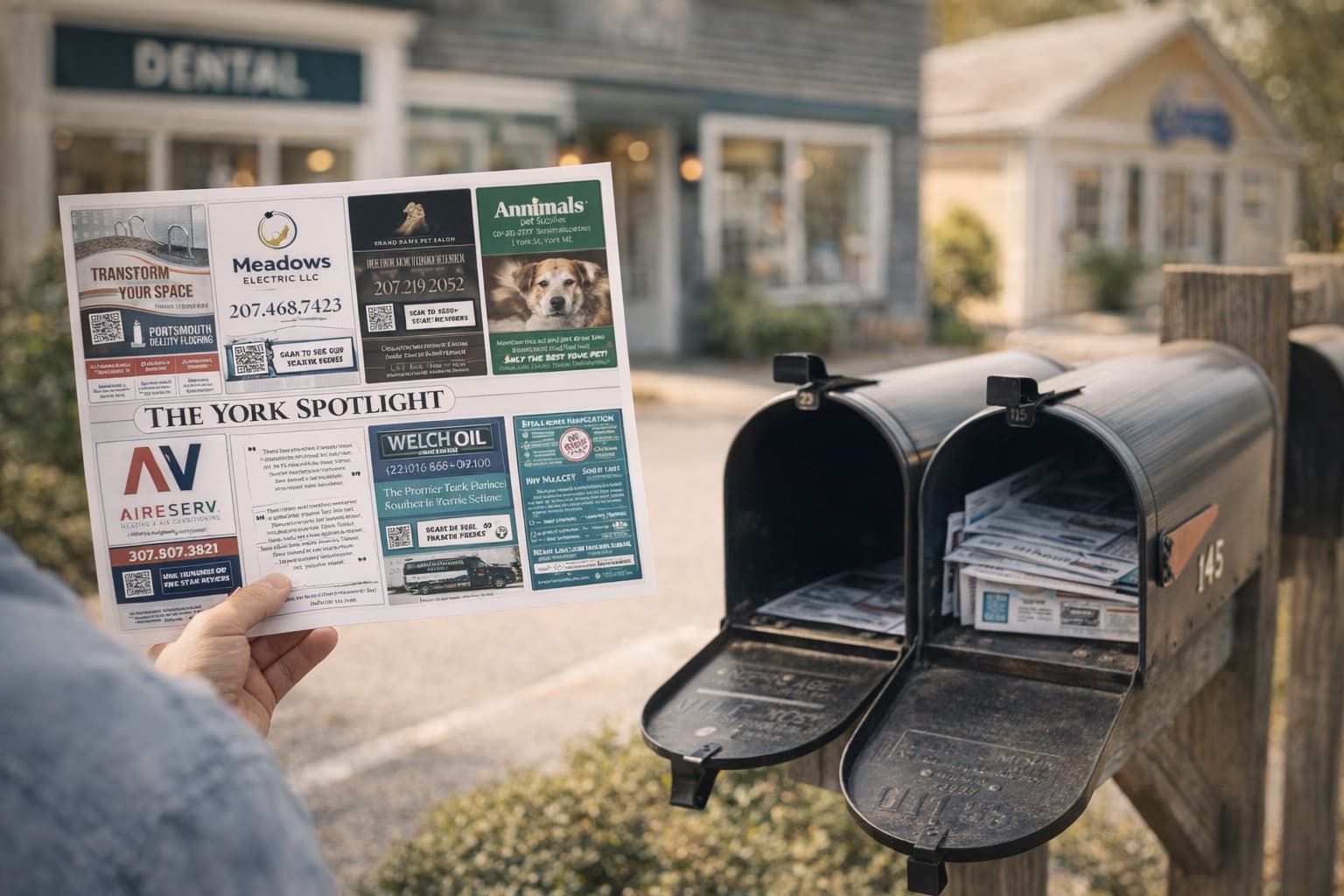
If you run a dental practice in 2026, you're probably acquiring new patients somewhere between $200 and $500 each through Google Ads, Facebook, and the occasional referral incentive. That's the going rate. Dental postcard marketing, particularly using shared 9x12 mailers, regularly produces new patient acquisition costs of $20–$60 each — meaning roughly 5x to 25x cheaper than digital channels. Dental practices that have figured out the new direct mail format are quietly stealing market share from practices still throwing money at competitive Google Ads. Let me show you why postcards work so well for dental practices and exactly how to set up a campaign that produces measurable ROI.
This is the post for dentists who want to stop overpaying for new patients.
Why dental practices are perfectly suited for postcard marketing
Dental practices match every criteria for direct mail success better than almost any other industry. Here's why.
1. Geographic patient base. Patients pick dentists within 5–10 miles of their home, almost without exception. Direct mail to a 5,000-household neighborhood targets exactly the prospects who could actually become patients. There's zero waste from "out of service area" reach.
2. High lifetime value per patient. Average dental patient LTV runs $1,500–$3,000+ over 5 years for general practices, much higher for cosmetic/implant-focused practices. A new patient acquisition cost of $50 against $2,000 LTV is roughly 40:1 ratio — a marketing dream.
3. Recurring revenue model. Patients don't churn quickly. Once you acquire a patient and they're happy, they keep coming back twice a year for a decade. Compare that to a one-time roof or HVAC sale where the customer relationship typically ends after the job.
4. Trust-driven decision. Patients pick dentists carefully. A postcard with credible local trust signals (years in practice, reviews, community involvement) outperforms anonymous Google Ad placements significantly.
5. Specific demographic match. Dental needs span almost every demographic — children, adults, seniors. Direct mail to a residential neighborhood reaches all of these in one mailing. You don't need precision Facebook targeting.
One acquired dental patient is worth $2,000+ over their lifetime. The marketing math should reflect that — not artificially constrain your acquisition cost to a fraction of immediate visit revenue.
The dental marketing economics problem
Most dentists are stuck with frustrating economics on their current channels.
Google Ads: "Dentist near me" type keywords cost $5–$25+ per click in major metros. At 5% conversion, $100–$500 per booked appointment. Roughly $200–$500+ per actual new patient (after no-shows and non-converters). Profitable, but not great.
Facebook Ads: Cheaper per impression but harder to qualify dental intent. Cost per booked new patient typically lands at $150–$400.
Referral programs: Highly effective but limited by existing patient base size. Hard to scale aggressively.
Solo dental postcards (the old way):
| Cost line | Amount |
|---|---|
| Mailing list (5,000 homeowner addresses) | $200–$500 |
| Printing (4x6 or 6x9, full color, 5,000 pieces) | $1,000–$1,500 |
| First-class postage (~73¢/piece) | $3,650 |
| Design + project management | $300–$500 |
| Total per send | $5,150–$6,150 |
That's $5K–$6K per send. Most dental practices that try solo postcards see modest results because the format doesn't dominate the mailbox and gets buried alongside every other dental ad in the area.
The solution isn't quitting direct mail. It's a better format.
The shared 9x12 model for dental postcard marketing
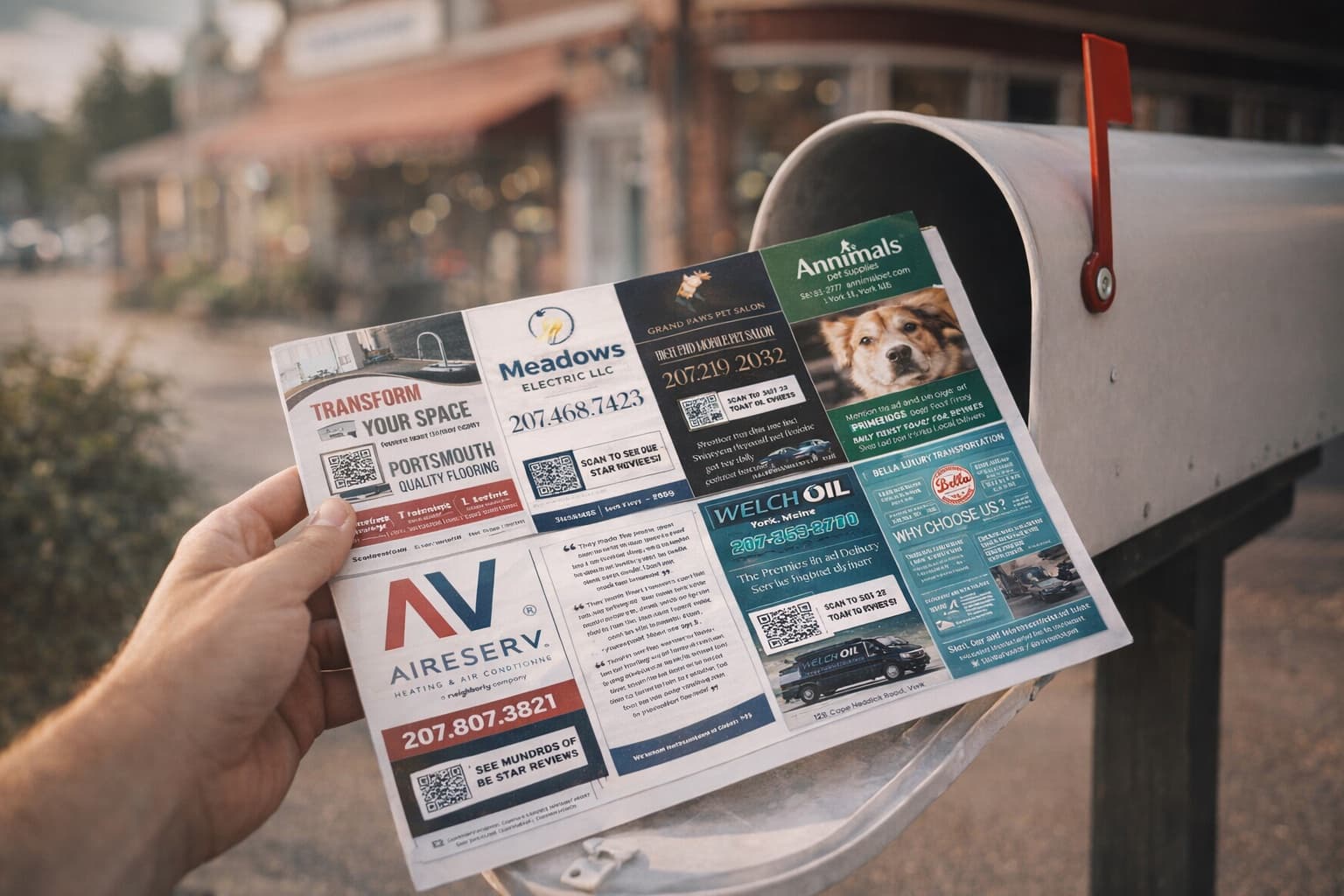
A 9x12 oversized postcard mailed via USPS EDDM, where ~16 local businesses (including ONE dental practice — yours) split the cost. You buy a single slot for $500. Your ad goes to 5,000 homes in a neighborhood you select.
| Metric | Solo dental postcard | 9x12 shared mailer slot |
|---|---|---|
| Card size | 4x6 or 6x9 | 9x12 (dominates the stack) |
| Cost per mailing | $5,000–$6,000 | $500 |
| Postage rate | ~73¢ first-class | ~26¢ EDDM (split 16 ways) |
| Households reached | 5,000 | 5,000 |
| Visual impact | Lost in mail pile | Sits on top |
| Frequency feasible | 1x/year for most | Quarterly or monthly |
| Dental exclusivity on card | None | Yes — only dentist on card |
For about 8–10% of solo postcard cost, you reach the same households with way more visual impact and territorial exclusivity over other dental practices. That changes the math fundamentally.
Dental postcard marketing economics on a 9x12 shared mailer
Here's the annual numbers for a dental practice running shared 9x12 mailer slots.
| Metric | Value |
|---|---|
| Cost per slot | $500 |
| Cards per year (quarterly) | 4 |
| Annual marketing spend | $2,000 |
| Households reached per year | 20,000 (5,000 × 4) |
| Typical inquiries per slot | 25–50 |
| Annual inquiries | 100–200 |
| Booked appointment rate from inquiries | 60–80% |
| Annual booked new patients | 60–160 |
| Patient retention rate (become long-term) | 70–85% |
| Estimated new patients acquired/year | 45–135 |
| Avg patient LTV | $2,000 |
| Total patient LTV from postcard marketing | $90,000–$270,000 |
Even at the conservative end — 45 acquired patients at $2,000 LTV = $90,000 in lifetime patient value from $2,000 in marketing spend. That's a 4,400% ROI. Per-patient acquisition cost: about $44.
Compare that to Google Ads at $200–$500 per new patient. Direct mail produces dental patients at roughly 1/10th the cost.
If you could have 45 new lifetime patients for $2,000, would you trade your $20K Google Ads spend for it? That's the math conversation every dental practice in 2026 should be having.
Designing a dental slot on a 9x12 mailer
The slot is roughly 3.8" x 2.8". Here's the framework that converts for dental practices.
The dental slot anatomy
Headline: A specific new-patient offer — NOT your practice name.
- ✅ "$59 New Patient Special: Exam, X-Rays, Cleaning"
- ✅ "FREE New Patient Consultation This Month"
- ✅ "$199 Whitening — New Patients Only"
- ❌ "JOHNSON FAMILY DENTISTRY"
Image: A real smiling person — NOT teeth/equipment shots.
- ✅ Professional portrait of a real patient (with permission) smiling
- ✅ Your team in scrubs welcoming a patient at the front desk
- ❌ Stock close-up of teeth
- ❌ Generic dental tools photo
- ❌ Anyone in dental scrubs holding equipment looking serious
Offer: Specific dollar value with redemption mechanism.
- ✅ "$59 New Patient Special — exam, X-rays, cleaning (normally $300)"
- ✅ "FREE Cosmetic Consultation + $500 off Invisalign treatment"
- ✅ "$199 Professional Whitening (normally $400) — new patients"
- ❌ "Quality dental care for the whole family!"
CTA: Phone AND online booking.
- Big readable phone number (older patients call)
- QR code → online booking page (younger patients book online)
- Address with map suggestion if possible
Trust marker: Dental-specific credibility.
- ✅ "5-Star Google ★★★★★ — 400+ reviews"
- ✅ "Family-Owned Practice Since 2008 — [Town] Local"
- ✅ "Most insurance accepted — Delta, MetLife, Aetna, more"
- ✅ "Same-day appointments available"
What kills dental slots
- Listing every service in tiny text
- Stock photos of teeth (everyone's eyes glaze over)
- Clinical/scary imagery
- "Best dentist in town!" with no proof
- No clear offer or new-patient pricing
- Forgetting to mention insurance acceptance (huge converter)