How to get local businesses to sponsor your team, school, or event: what to offer, what to charge, the exact words to say, and what to do when they stall.
Most people raising money for a team, a school, or a fall festival walk into a local business and ask for a favor. And most of them walk out with a "we'll think about it." So if you're trying to figure out how to get local businesses to sponsor you, here's the one shift that changes everything: stop asking for a donation and start selling an ad. The owner isn't your aunt. They're a business, and businesses buy customers.
Full transparency on why I'm writing this. I don't run a Little League. I run and teach a business where regular people sell ad spots to local businesses on one big shared postcard. Thousands of people in our community learn to make these exact calls and walk into these exact shops. A sponsorship ask is the same conversation. So I'm going to hand you the scripts and the objection handling we actually use, adapted for your sponsor ask.
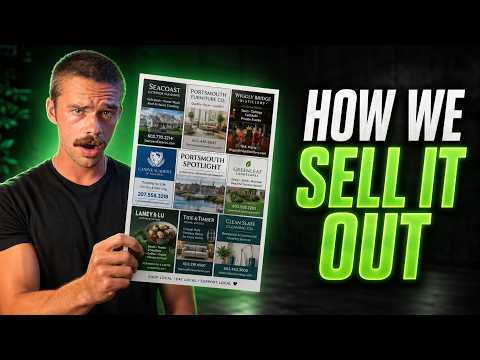
Watch: Offers, Follow-up, & Urgency - 9x12 Method Live Group Call · Summary and transcript
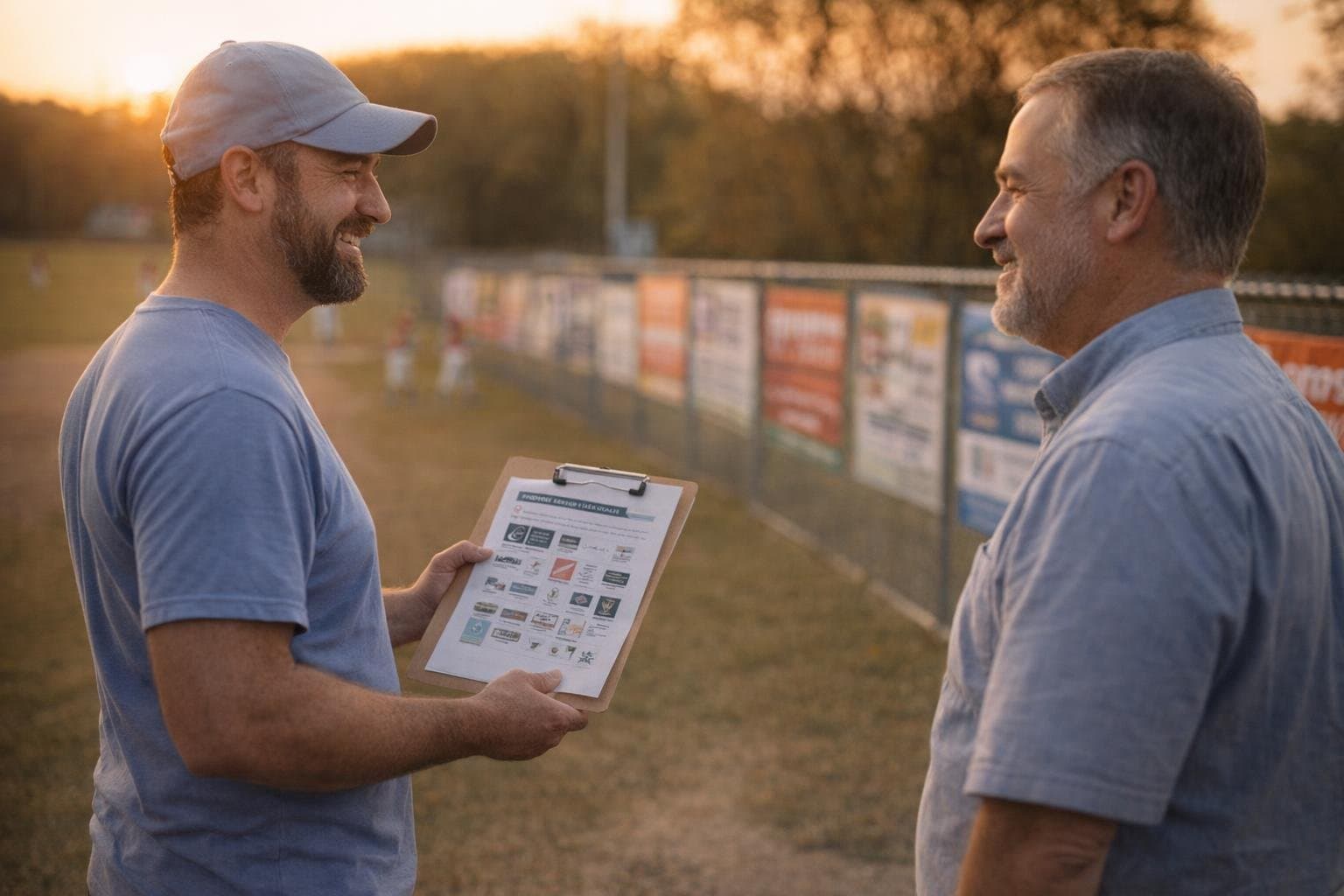
Here's the thing. When a pizza shop puts its name on your outfield fence, it isn't only being nice. It's paying to be in front of every family that sits in those bleachers all season. That's advertising. Good local sponsorship works because both sides win: you get the money, and they get seen by the exact people who live near them.
So the pitch changes from "can you help us out?" to "here's who you'll be in front of, here's what it costs, and here's what you get." That's a pitch an owner can actually say yes to, because it fits in their marketing budget instead of their charity budget. And a lot of small businesses have one and not the other.
Nobody owes you a sponsorship. But plenty of owners will happily buy a good ad.
One catch if you're a nonprofit: pitch it like an ad, but keep what you actually print to a name, a logo, and a thank-you. There's a real IRS line here, and I'll show you exactly where it is in the tax section below.
Does that mean you lose the community angle? Not at all. "You'll be supporting the 10U team, and 250 local families will see your name every Saturday" is way stronger than either half on its own.
The number one mistake I see? Walking in with no number. "Any amount helps" sounds humble, but it makes the owner do the work. And busy owners don't do extra work. They say "let me think about it."
Start from your budget and work backward. Here's an example with made-up numbers (not market rates) for a youth team that needs $3,000 for the season:
$3,000
Season budget
$1,000
Title sponsor (1 spot)
$250 each
Field sponsors (4 spots)
$125 each
Supporter level (8 spots)
13
Businesses needed
See what that does? You now know you need about 13 yeses, not "a bunch of help." And because you planned for lots of smaller sponsors, losing one won't wreck your season.
On our 9x12 cards, every business gets its own category. One plumber, one dentist, one roofer. That exclusivity is a huge part of why owners say yes, because their competitor can't be sitting right next to them.
Do the same thing with your title and middle tiers. "We only take one auto shop at this level" gives the owner a reason to decide now instead of next month. And it's true, so you're not playing games.
Put it all on one page, like a little media kit: who you reach, how many people, how long, the tiers, the price. That page does half your selling for you.
Don't start with the biggest company in town. Start where a yes is most likely.
Businesses your families already spend money with. The barber, the dentist, the coffee shop. They already know your people are their customers.
Parents and members who own a business. Check your roster. This is your warmest list by a mile.
Businesses already sponsoring other things. Look at the banners at the high school stadium, the 5K t-shirt, the church bulletin. We teach operators to use sponsor banners and event sponsor lists as a prospect list, and it works just as well for you. They already have a budget and they already get it.
Businesses that match your crowd. A youth soccer league fits a pediatric dentist, an orthodontist, or a sporting goods store. A car show fits auto shops. A golf outing fits a financial advisor.
Service businesses that cover your area. Roofers, HVAC, landscapers, realtors. They're spending money to reach homeowners anyway.
My filter for who belongs on a card works here too: "are they willing to serve the people of our town, are they not a scammer, then they're good!" Simple.
Okay so here's where most guides hand you a letter template and wish you luck. A letter is fine as a leave-behind. But letters alone get ignored. Conversations close. Let me break down the three ways we do it.
My rule for walk-ins: "I would just walk in with one in my hand. Don't try to come across too formal 99% of the time." For you, the "one" is your one-page sponsor sheet. If the owner isn't in, leave the sheet with whoever is at the counter and write down when the owner usually comes in.
This is the part people dread, and honestly it's where the money is. Here's a structure based on the cold call script Ben uses, which I've called one of the cleanest I've ever heard:
"Hey, how are you doing? Quick question for you, do you guys serve the [town] area? Okay, awesome. Sorry for the weird call, I won't take much of your time. My name is [name], I'm with the [team or event]. Long story short, we're putting together our sponsors for the season, and about [number] local families are going to see our sponsors every week. I'm only taking one [their industry] at the [tier] level, and I wanted to see if you'd be interested before I go to anyone else."
That "sorry for the weird call" isn't weakness. It's a pattern interrupt. Owners get pushy pitches all day, and that line makes them relax.
And talk to whoever picks up: "Don't immediately ask for the owner, you won't get through. Very kindly pitch the receptionist or whoever you're talking to, get them on your good side." The front desk person can make or break you. If you want the full playbook, here's our guide to cold calling local businesses.
Email first, then call the next day and ask if they saw it. It gives you a reason to call, so it feels less cold. Keep the first email dead simple, and leave the price out of it. On our cards we learned that if you give them the price up front, you give them every reason not to respond. Save it for the reply or the call. Something like this:
"Hi [owner name], I'm [name] with the [team or event]. About [number] local families will see our sponsors every week this season, and I'm only taking one [their industry]. Would you be open to hearing what that looks like?"
That's it. A question, not a five-paragraph letter.
The calendar matters as much as the pitch. Owners plan their marketing ahead, and the good spots on the banner should go to the people who say yes first. Here's the order I'd follow for any team, school, or event:
Set your budget and build your tiers. One page, real prices.
Make a list of 40 to 60 businesses, starting with the warm ones. Track every one in a simple CRM (ours is free to join) so you can see who you talked to and when.
Start well before you need the money. A good rule of thumb from experience: about three months out for a big event, and a month or two before the season starts for a team.
Contact 10 businesses a day by walk-in, phone, or email-then-call. Pitch the tier that fits each one.
Follow up every few days until you get a clear yes or no.
Collect payment up front and get their logo. A sponsor isn't real until they've paid.
Deliver everything you promised, send a recap with photos, and ask about next year.
Why 40 to 60 for 13 spots? Because you'll hear a lot of no. Charlie, one of our members, made 94 cold calls in one week. Mostly "not interested," a few "send me an email," and 6 solid leads. His takeaway became the community's motto: "Persistence > Perfection." It's a numbers game.
Send it. Then don't let it die. My rule is simple: "The sale almost NEVER closes on the first touch. It closes on the second, third, or fourth follow-up." Owners aren't ignoring you. You're just a tiny part of a very busy day.
Brett, one of our members, had a sale take 23 days: four follow-ups by email and phone over three weeks before he got a "send the mock-up" reply. Then seven rounds of ad tweaks. Then he closed a double slot. That's normal. A follow-up text can be one line:
"Hey, just circling back on the [team] sponsorship. Still have a couple of spots open at the [tier] level if you're interested!"
Two moves. First, do the per-person math out loud. On our cards, JP's line is "then I sell the .10 cents per house price," because $500 to reach 5,000 homes is ten cents a home. If your $250 sponsor gets seen by 250 families all season, that's a dollar a family. Say that.
Second, offer the smaller tier. And be okay if it's still a no. Like I tell our members: "Some businesses simply don't have the budget for this. Some go through rough months just like everyone... and that's okay."
Don't argue. Ask for a referral before you go: "And before I let you go, who DO you know that might benefit from this?" Business owners know other business owners. One no can turn into your next warm lead.
Never promise a number. You don't know, and a broken promise kills next year's renewal. Tell them who they'll be in front of and how often, and let them decide. That's the honest answer, and owners respect it.
Some guides call this a "gray area" and move on. If you're a nonprofit, there's a real IRS line between a sponsorship acknowledgment and advertising, and crossing it can turn sponsor money into taxable income.
Acknowledgment (generally fine): the sponsor's name, logo, and slogans that don't use comparative or qualitative descriptions, plus value-neutral descriptions.
Advertising (can be taxable): messages with "qualitative or comparative language, price information," an endorsement, or an inducement to buy.
And this one trips people up: "A single message that contains both advertising and acknowledgement is advertising."
So "Thank you to Joe's Plumbing" on the banner is acknowledgment. "Joe's Plumbing, the best in town, 20% off this month!" is advertising. The IRS page also excludes some things from the sponsorship safe zone, like payments tied to attendance numbers, placements in regularly scheduled periodicals, and trade shows. The good news: according to that same page, simply making a sponsor the exclusive sponsor generally isn't a problem, so your one-per-industry tiers can stay.
Two more rules if your sponsors want a receipt for a contribution:
The IRS says a written acknowledgment is required to back up a charitable contribution of $250 or more, and it has to describe anything you gave in return with a good-faith estimate of its value.
For quid pro quo contributions over $75, the organization has to give a disclosure statement. The penalty is $10 per contribution, up to $5,000 per fundraising event or mailing.
Getting the first yes is the hard part. Keeping them is easy, if you do three things.
Deliver exactly what you sold. Logo on the banner by opening day. Name in the program. The Facebook post goes up when you said it would.
Send a recap with photos. A picture of their logo on the fence with a full crowd behind it is worth more than any thank-you card. Owners show that photo to their spouse.
Ask about next year before the season ends. Your happy sponsors are your easiest money next season. Lock their tier before someone else asks for it. On our cards, Joey's first advertisers upgraded to bigger spots on his second issue, and the renewal conversation works the same way for sponsors.
One more trick from the card world. When a well-known, well-respected business says yes, tell the next prospect. On giving free spots to churches and charities, my answer was "100% as long as they have a good reputation!" and then use that name as social proof for the rest of your sales. Same here. "The credit union is our title sponsor this year" opens doors.
Okay, here's where I nerd out for a second. If you just spent a month calling local businesses, pitching them, following up, and collecting payments, guess what? You just learned how to sell local advertising. That's the whole skill behind what I teach.
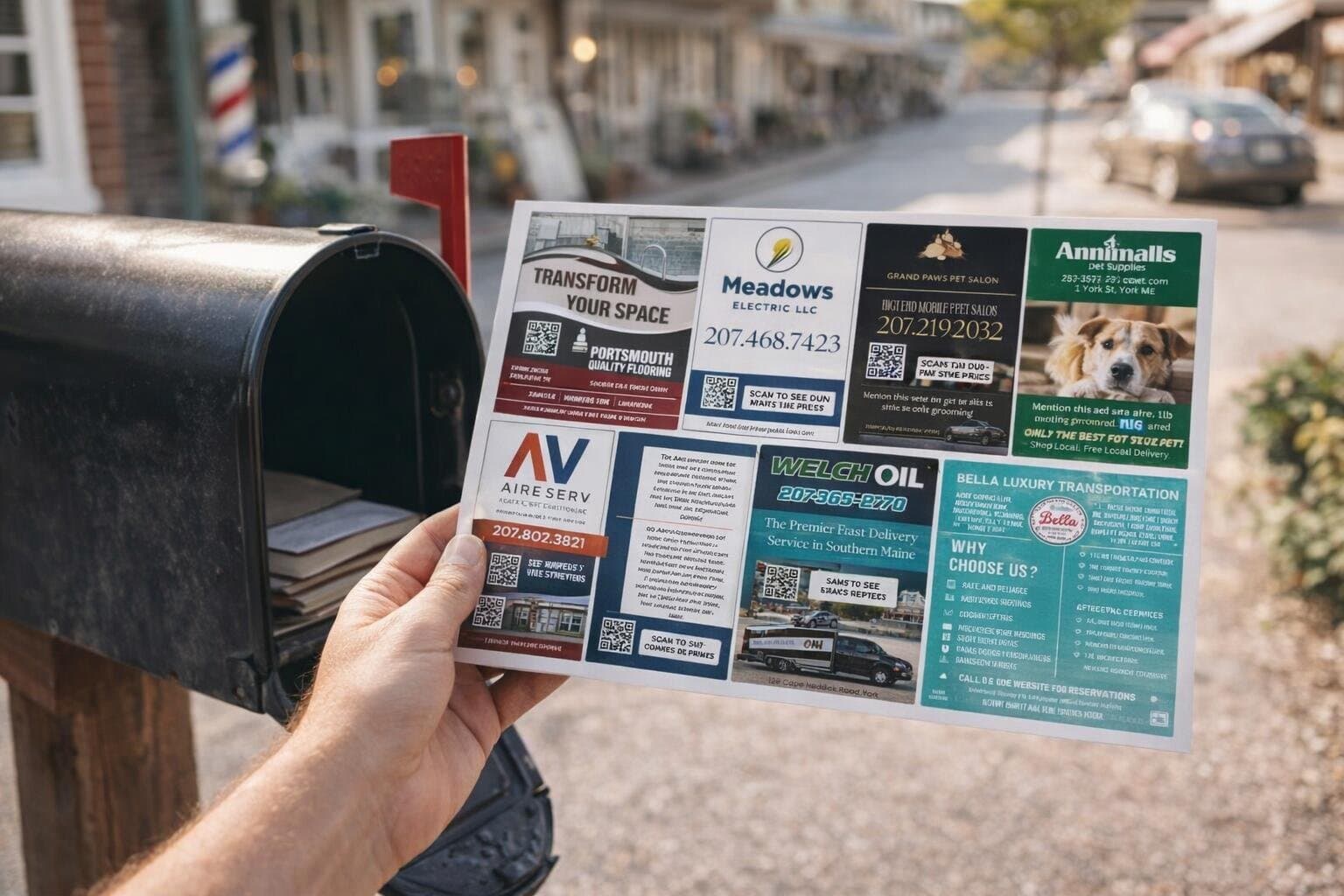
In the 9x12 Method, you sell about 16 ad spots on one big 9x12 postcard at $500 each. That's $8,000. Printing and mailing to 5,000 homes is $2,999 All Inclusive through our print shop, so you keep $5,001. Same calls. Same follow-ups. Same "sorry for the weird call."
And the two worlds mix really well. Ange, one of our members, sold a $900 spot to a local event organization. Andrew has been considering a charity tie-in for his second card. On one of our group calls, a member pitched a $100 add-on so an advertiser could also sponsor a local nonprofit. Business owners love saying yes to something that helps their town and gets them customers.
Full transparency: I teach all of this inside the community, but you don't need it to land your sponsors this season. Everything above is enough. If you get the bug and want to turn it into a real business, we'll be there.
Lead with what they get, not what you need. Tell them who they'll be in front of (how many families or attendees, and how often), offer one specific tier, and ask if they want it before you offer it to their competitor. Give the price once they're interested, not in the first cold email. Do it in person or by phone, and use a letter or one-pager only as a leave-behind.
Work backward from your budget. Decide how much you need, then split it into two or three tiers with set prices, and count how many sponsors you need at each level. Plan for lots of smaller sponsors instead of one big one, so a single no doesn't sink you. Check what similar groups in your area charge so your prices feel normal.
Things they can picture: their name or logo on jerseys, banners, signs, programs, and the event page, a thank-you post on social media, a mention in your parent or member emails, and a shout-out at the event. Category exclusivity at the top tiers is one of the strongest things you can offer.
Go in person or call. Letters and emails are easy to ignore, and a real conversation closes more. The best combo is a short personal email, then a phone call the next day asking if they saw it. Leave your one-page sponsor sheet behind if the owner isn't there.
It depends on who you are and what the business gets back, so have them check with their tax pro. If you're a nonprofit, the IRS says a donor needs a written acknowledgment to back up a contribution of $250 or more, and you owe a disclosure statement for quid pro quo payments over $75. If you aren't a registered nonprofit, don't promise a write-off.
Deliver everything you promised, on time, then send a recap with photos of their name in front of real crowds. Ask about renewing before the season or event ends, while they're still happy, and give returning sponsors first pick of their tier.
Go get those yeses. And as always, I'm rooting for you.
Ready to run your own card?
Get the course, scripts, tools, and weekly coaching inside the 9x12 Method community.
 Mitchell Tebo