 Mitchell Tebo
If you've ever Googled how to find advertisers for a postcard, you probably noticed something weird. Almost every result is written for the business owner buying an ad, not for you, the person selling one. So let me fix that. Here are 18 genuinely different places to find local businesses that will pay for a slot, each with one thing to do about it this week.
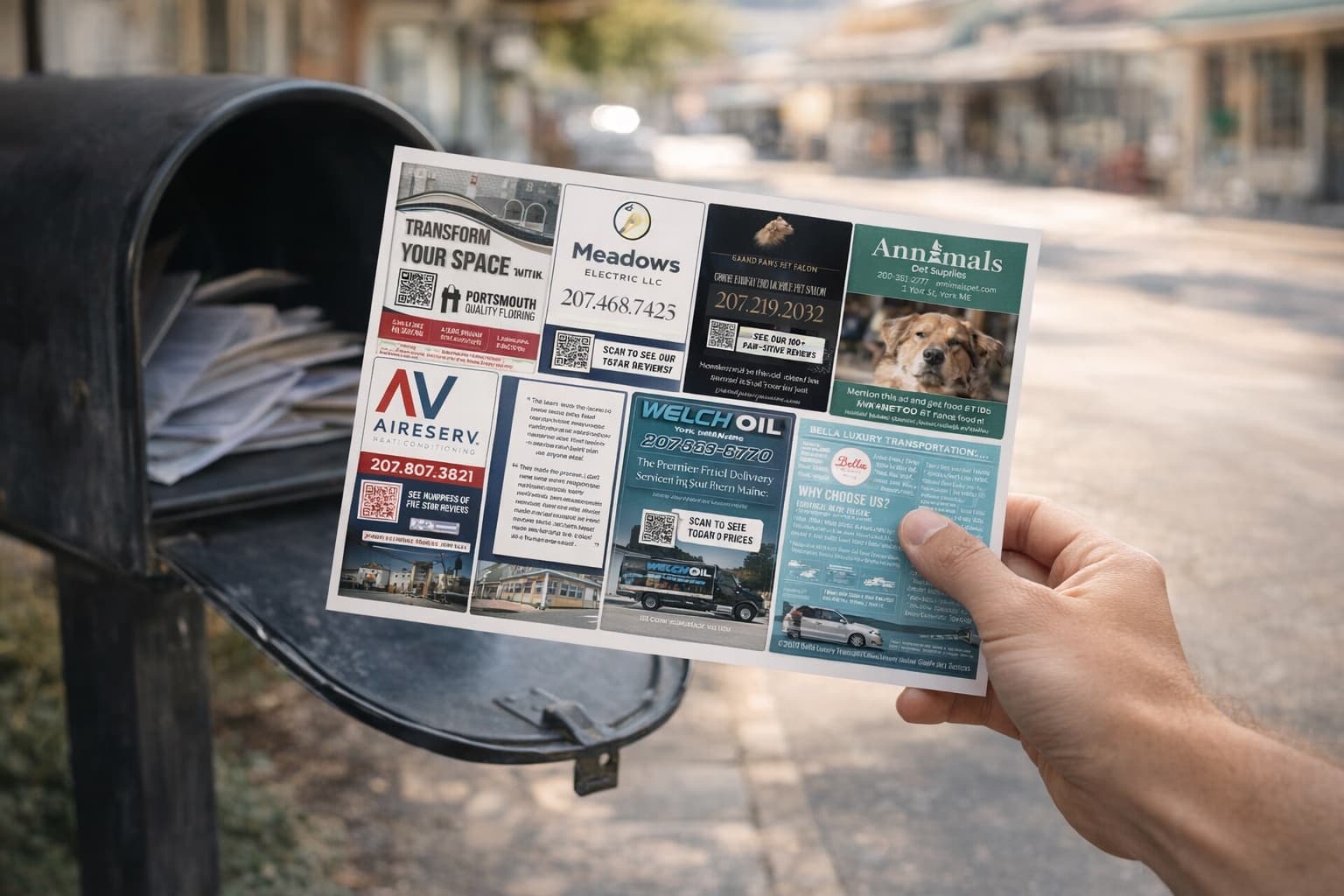
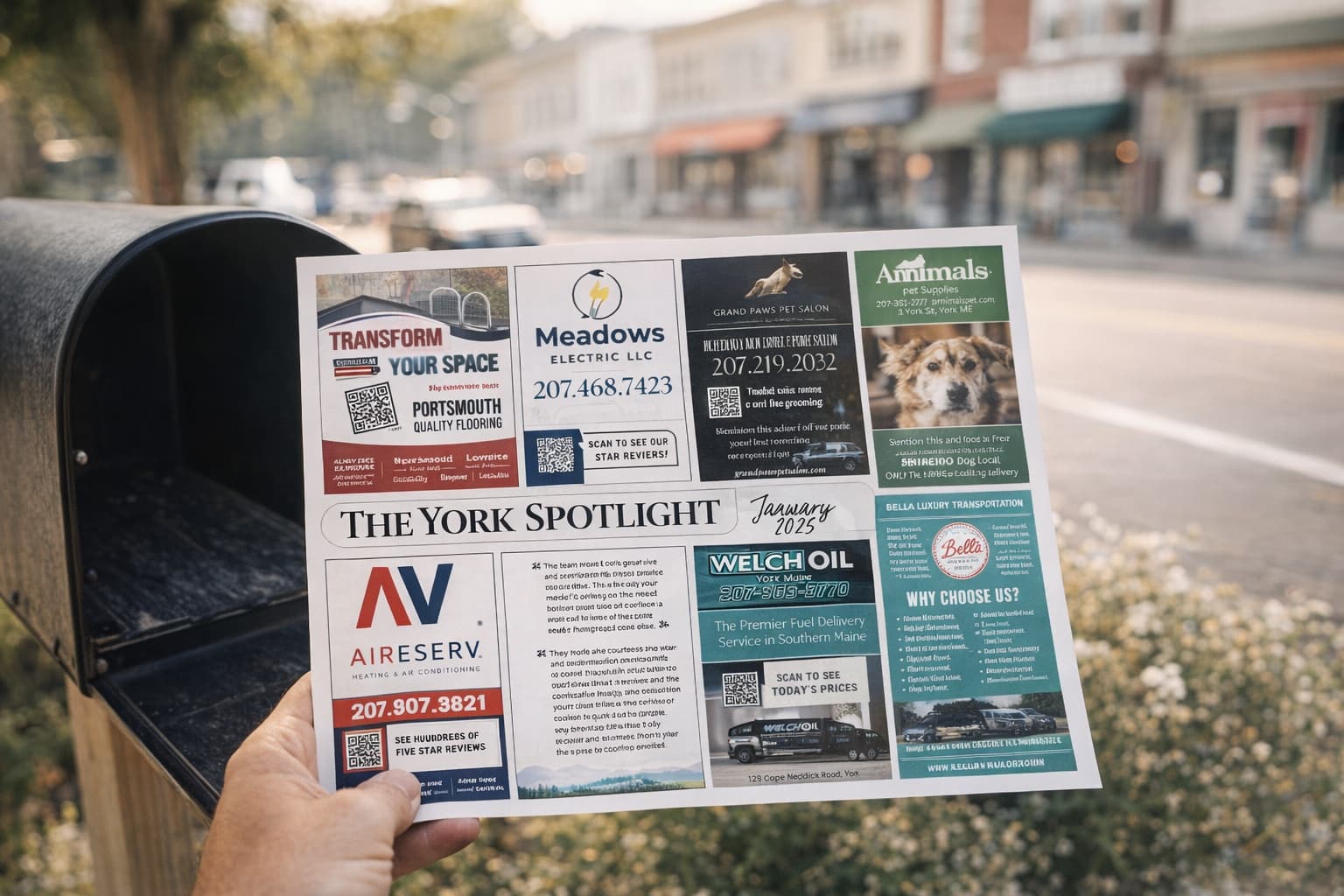
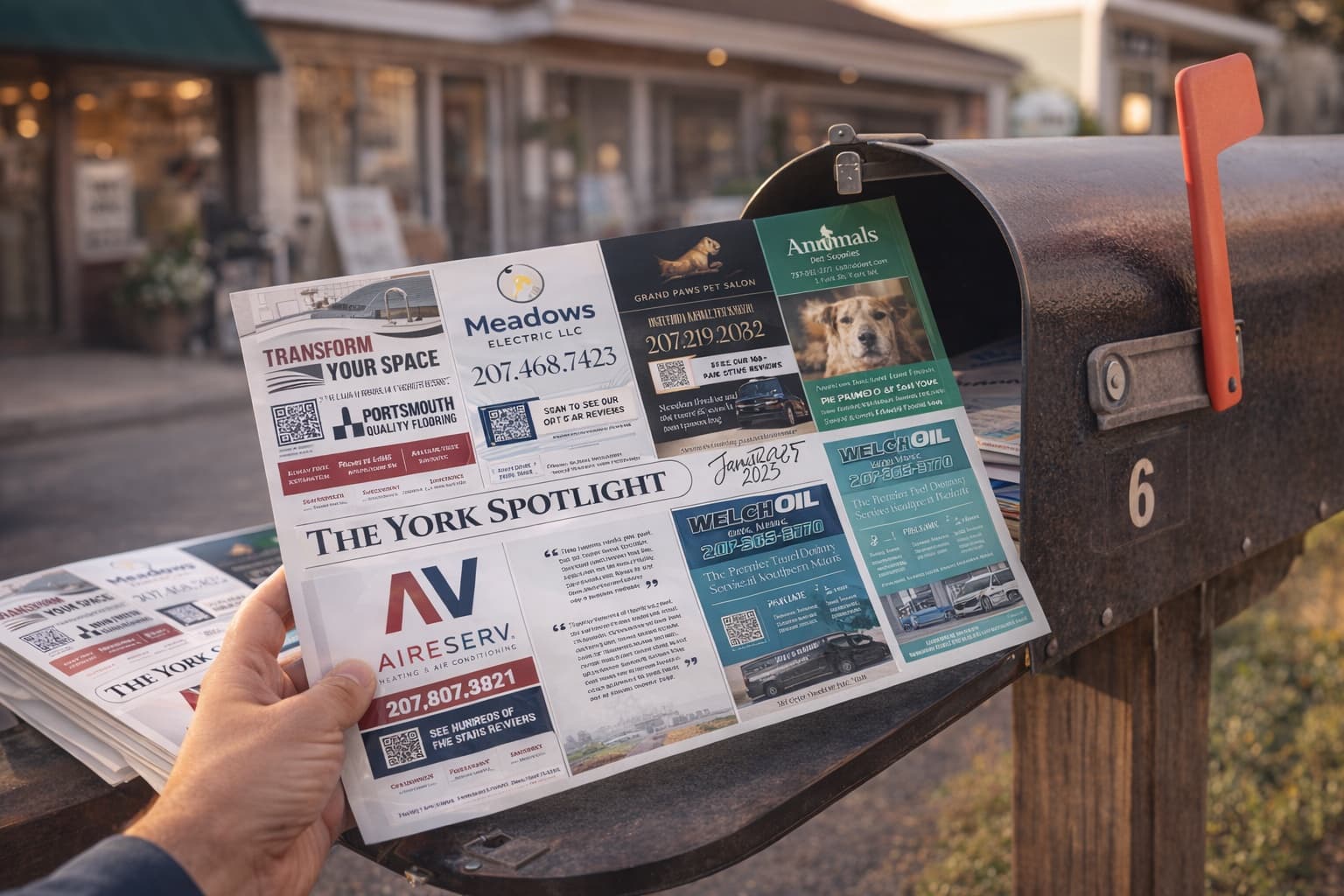
A full 9x12 card is 16 slots at $500 to 5,000 homes (a community card is $250 slots to 2,500 homes). Either way, the whole business comes down to finding enough businesses to say yes.
How to find advertisers for a postcard when everyone copies one script
Here's the thing. A lot of people get into this business with exactly one prospecting move: a Facebook group post. Facebook groups are still the #1 channel in our community, so I'm not knocking them. But when thousands of people paste the same post into the same local groups, business owners start scrolling right past it. If that's your only move, one slow week makes the whole business feel broken.
It's not broken. You just need more doors. The 9x12 Method was never one script. It's a map of every place local businesses already show you they spend money on marketing. Sharina, who sold out a card without a single cold call, put it perfectly: "If emails aren't working, try FB groups. If FB groups aren't working, switch to DMs."
Full transparency, I teach all of these inside the 9x12 Method community, with scripts for each. You don't need it to use this list.
The businesses that will buy your slots are already raising their hands. They're on the outfield fence, in the church bulletin, and in your mailbox every week.
Start with people who already trust you
The fastest yeses you'll get, because the trust is already built.
1. Your phone's contact list
Write down everyone in your contacts who owns a business. Then add the businesses you already pay: your dentist, mechanic, barber, the Friday night pizza place. Chelsea mentioned her card to a friend over dinner, and the friend immediately wanted an ad for every one of her businesses. Your warm network is the easiest place to land slot number one.
2. Referrals from advertisers who already said yes
Ask right after they pay, when they're most excited: "And before I let you go, who DO you know that might benefit from this?" Offer a small credit toward their next card for any referral that closes.
3. Past advertisers and old "not right now" leads
Your easiest sale on card two is someone from card one. Give past advertisers first dibs on their category, then revisit every prospect who said "check back in the spring." That's not a no. That's a date. Here's my approach to renewing past advertisers.
Find businesses to advertise on postcards by following the ad money
My favorite way to find businesses to advertise on postcards, and the one most people skip. Everyone below already has an ad budget. You're not convincing them to advertise. You're showing them another way to do it.
4. The other mailers in your own mailbox
Save your local mail for two weeks: coupon envelopes, coupon booklets, other shared postcards, the glossy neighborhood magazine. Every local business in that pile has a proven mail budget. Reach out: "Saw your ad in the coupon mailer. I'm putting together a big postcard going to 5,000 homes in town, one business per industry."
5. Local magazines, newspapers, and the yellow pages
List every local advertiser in recent issues of each local magazine and paper, plus the yellow pages if your area still gets one. Yellow pages advertisers often pay every single month just to stay listed. Next to that, a $500 slot to 5,000 homes looks cheap. Same with billboards.
6. A dead local publication's old advertisers
This one is sneaky good. Most towns have a local magazine or community paper that folded in the last few years. Find the final issues at the library or on its old Facebook page, and list every advertiser. They lost a channel they were happily paying for, and plenty never replaced it. One of our members did exactly this after a local magazine quietly shut down, and landed appointments with 40+ businesses that were already used to paying for ads. Your opener: "You used to advertise in [publication]. Now that it's gone, how are you reaching homeowners?"
7. Church bulletins
Grab the weekly bulletin from every church near your routes. The back page is often a grid of ads from trusted, family-run local businesses.
8. School and youth sports sponsor banners
Walk the outfield fence at the youth baseball field and the high school stadium, and photograph every sponsor banner. Then check the yearbook and the booster club page. "I saw your banner at the field" is a great first line.
9. Event sponsors
Every 5K, fall festival, parade, and car show has a sponsor list on the t-shirt, the banner, or the event website. Pull it the week after. Sponsors want to be seen as part of the community, which is exactly what a shared card is.
10. Businesses advertising in local Facebook groups
Local groups are also a live list of businesses promoting themselves. Watch who posts specials and who gets tagged in "who do you recommend" threads. I cover the posting side in my Facebook group prospecting guide.
Walk and drive the routes you're mailing
The best-fit businesses are already working the neighborhoods you mail. Go look.
11. Yard signs
Every yard sign on your routes is a business trying to win more jobs right there. Corey walked his dog around a park, passed four yard signs (a roofer, junk removal, a handyman, and a power washer), photographed each one, and texted every owner the picture and where he saw it. As he put it, these folks are "spending time and money."
12. Work trucks, vehicle wraps, and door hangers
Wrapped vans in driveways on your routes are plumbers, painters, and pest control companies with a customer right there, phone number on the side. Same for door hangers on your own door. One member keeps a voice recorder in his car, says business names out loud as he drives, and turns the recording into a spreadsheet later.
13. Walk-ins on Main Street
Pick the main street closest to your routes, bring a sample card, and walk into every local business for two hours. Travis builds vehicles in a factory and had zero sales experience. He walked into 10 businesses in one day and sold 8 slots. Here's my playbook for walking in door to door.