Plumbing postcards that get the emergency call: 7 plumbing postcard ideas, what to put on the card, the seasons to mail, and what a slot costs a plumber.
Hey, real talk. Plumbing might be the most underrated category on a 9x12 card, and here is the reason nobody talks about. When a pipe bursts at 6am on a Tuesday in January, nobody opens a browser and comparison shops. They grab whatever name is closest at hand, and if the plumber did this right, that is the card stuck to the fridge. That is the entire logic behind plumbing postcards. You are not buying a lead. You are buying the position of being the name a panicking homeowner reaches for. Hunter pitched a plumbing company and they handed him a check on the spot, then asked him to help design their ad. That is how fast this category can move when you catch the right owner. Let me break the whole thing down, including 7 plumbing postcard ideas you can put on a card this season.
This is for operators selling plumbers and for plumbers deciding if a slot pays.
Plumbing behaves almost exactly like HVAC, which is one of the strongest categories in the entire model. Four reasons.
Emergency demand with zero patience. A burst pipe, a backed up main, a flooding water heater. These are not researched purchases. They are panic calls, and the winner is whoever is top of mind or physically visible in that moment.
Real ticket values. An emergency call runs $500 to $2,000. A water heater replacement is $1,200 to $3,000. A repipe is far more. One job off a card covers the slot several times over.
Repeat customers for life. Once a plumber does a good job in a house, they become that household's plumber. The customer value is not one job, it is a decade of jobs plus every referral to a neighbor.
Owner-operator decisions. Most local plumbing shops are run by someone who can say yes to $500 without a committee. That makes the sales cycle short.
A homeowner with water spreading across the kitchen floor is not comparison shopping. They are grabbing the closest phone number they trust. Your job as the plumber is to already be that number before the pipe breaks.
Here's the thing about plumbing postcards. The plumbers who get calls don't try to say everything. They pick one problem, one offer, and one season. Pick ONE of these per card.
Headline: "Frozen Pipes? 24/7 Emergency Plumbing." Land it in October or November, before the first hard freeze. When the pipes go in January, this is the card on the fridge.
Headline: "Water Heater Over 10 Years Old? Free Check." It plants a question every homeowner can answer in two seconds, and the answer for a lot of them is "uh oh." Great for April and May, or any time of year.
Headline: "Thanksgiving Disposal Jam? We're Open." Late November for Thanksgiving disposal disasters, and January for the Christmas grease clogs. Almost nobody markets to these on purpose, which is exactly why it works.
Headline: "Burst Pipe? Call Now, 24/7." The phone number is the biggest thing on the ad, bigger than the logo, bigger than the headline. This is the card people keep in the junk drawer for years.
Headline: "Your Neighborhood Plumber. 5 Minutes Away." Plumbers love tight routes, and homeowners love a plumber who's close. Name the neighborhood on the card if the routes are tight enough.
Headline: "Slow Drains? Sewer Camera Inspection." Older homes with mature trees are prime territory for sewer line trouble. This is a premium ticket for the plumbers who offer it, so it pairs well with a double slot.
One job. That is the break-even. A single water heater replacement pays for the slot twice over, and the customer is now theirs for the next decade. Compare that to plumber direct mail done solo: printing and mailing your own 9x12 to 5,000 homes is $2,999 All Inclusive through 9x12 Method Printing. The shared slot reaches the same 5,000 homes for $500.
The math argument that lands hardest with plumbers is the statistical one. Water heaters have roughly a 10 year average lifespan. Out of 5,000 homes on your mailing routes, dozens of water heaters are statistically about to fail this year. The plumber who is visible when that happens gets those jobs. That is not a sales pitch, it is arithmetic.
Plumbers also go to 6 month and annual contracts more readily than most categories, because they think in equipment budgets and seasons rather than month to month.
Plumbing has three clean windows, and they are driven by weather and holidays.
October and November: burst pipe season prep. This is the biggest one. Mail before the freeze so you are the name on the fridge when January hits. A plumber who advertises in November gets the panic calls in January.
April and May: water heaters and pre-summer. Water heater checks, AC condensation line issues, and the general pre-summer maintenance push.
Post-holiday drain windows. Two very specific spikes. Late November for Thanksgiving garbage disposal disasters, and January for Christmas grease clogs. Both are real, both are predictable, and almost nobody markets to them deliberately.
I am mailing to [route name], which covers the [neighborhood] and [neighborhood] areas. That is your service zone. We are putting one plumber on the card. Want it locked?
Plumbers care intensely about drive time. They want jobs clustered five minutes apart, not thirty. Showing them a route map of a tight neighborhood inside their service area is a stronger pitch than any number of impressions.
Water heaters last about 10 years on average. Out of 5,000 homes on this card, statistically dozens are about to fail. The first plumber they think of gets the install.
One plumber on the card. If you pass, I am offering it to [competitor] next, and they will be the only plumbing name in 5,000 mailboxes for the next month.
This is the most common one in plumbing, and it is usually true.
Then this is a retention play, not a lead play. Your existing customers see your name and remember you for their next emergency instead of Googling and finding somebody else. And when the busy season ends, you have a pipeline instead of a cliff.
Be honest here and either skip them or pivot. A residential 9x12 card is genuinely not the right buy for a commercial-only plumber. You can mention them to property managers on your card if you have any, but do not sell them a slot that will not work. Selling a bad fit gets you one payment and zero renewals.
Was it a coupon pack with thirty businesses crammed in, or a card where you were the only plumber? Different product. On this card you are the only plumbing name in 5,000 homes for the whole month.
Headline is the emergency or the offer. "Burst Pipe? 24/7 Emergency Service" or "$50 Off Any Drain Cleaning." Never the company name as the biggest text.
A big, readable phone number. Bigger than you think. Plumbing is still overwhelmingly a phone call business, and the person calling is often stressed and in a hurry.
"24/7 Emergency Service" if they offer it. This single line drives more calls than almost anything else in the category.
License number and "Licensed and Insured." Homeowners are letting a stranger into their house during a crisis. Trust markers matter.
A local trust line. "Family-owned since (year)" tells people this isn't some out-of-town call center.
One coupon. "$50 off any service" gives the non-emergency folks a reason to call this week.
A QR code to a booking page for the non-emergency work.
Blues as the dominant color. Reads as water and as trustworthy at the same time.
What kills it:
A phone number too small to read at arm's length. In an emergency, that is a lost job.
No mention of emergency availability when they actually offer it.
Listing twelve services in tiny type instead of one clear offer.
Stock photos of a wrench. Nobody has ever called a plumber because of a wrench photo.
Put a tracked QR on the slot with ScanLab or any QR tool with analytics, and encourage the plumber to use a tracked phone number if they can. Emergency calls come by phone, so phone tracking matters more here than in most categories.
Do not put two plumbers on one card. Same rule as roofers. Category exclusivity is the core of what you are selling, and word travels fast in the trades.
Skip the big franchise chains. Corporate-owned plumbing franchises have marketing controlled at a level that will never approve a local slot. Stick to local owner-operators who can decide on the spot.
Watch the overlap with HVAC. A lot of shops do both plumbing and HVAC. If you have already sold an HVAC slot, confirm the plumber does not also do heating and cooling, or you have accidentally put two competitors on the same card. Ask before you sell.
Full transparency, the plumbing scripts and the seasonal contract framing live inside the 9x12 Method community. You do not need to join to walk into a plumbing shop in October and offer them the pre-winter card. The community is the support layer for the situational stuff.
Yes, and plumbing behaves much like HVAC, which is one of the strongest categories in shared mail. Emergency plumbing demand is urgent and non-comparison-shopped, so being the name already visible on a homeowner's fridge wins the call. Ticket values run $500 to $2,000 for emergency calls and $1,200 to $3,000 for water heater replacements, so a single job covers a $500 slot several times over.
Pick one problem per card: a pre-freeze burst pipe card in October or November, a "how old is your water heater?" card, a holiday drain card for Thanksgiving disposal jams and Christmas grease clogs, a flat-price drain cleaning coupon, a 24/7 emergency number card, a "we're in your neighborhood" card, or a sewer camera inspection card for older neighborhoods.
Lead with the emergency or a specific offer as the headline, such as "Burst Pipe? 24/7 Emergency Service" or "$50 Off Any Drain Cleaning," never the company name. Include a large readable phone number since plumbing is a phone-call business, "24/7 Emergency Service" if offered, license number and insured status, a "family-owned since" line, a QR code for non-emergency booking, and blue as the dominant color.
October and November is the highest-stakes window, landing before freeze season so the plumber is top of mind when pipes burst in January. April and May works for water heater checks and pre-summer maintenance. There are also two predictable drain spikes worth targeting: late November for Thanksgiving garbage disposal problems and January for Christmas grease clogs.
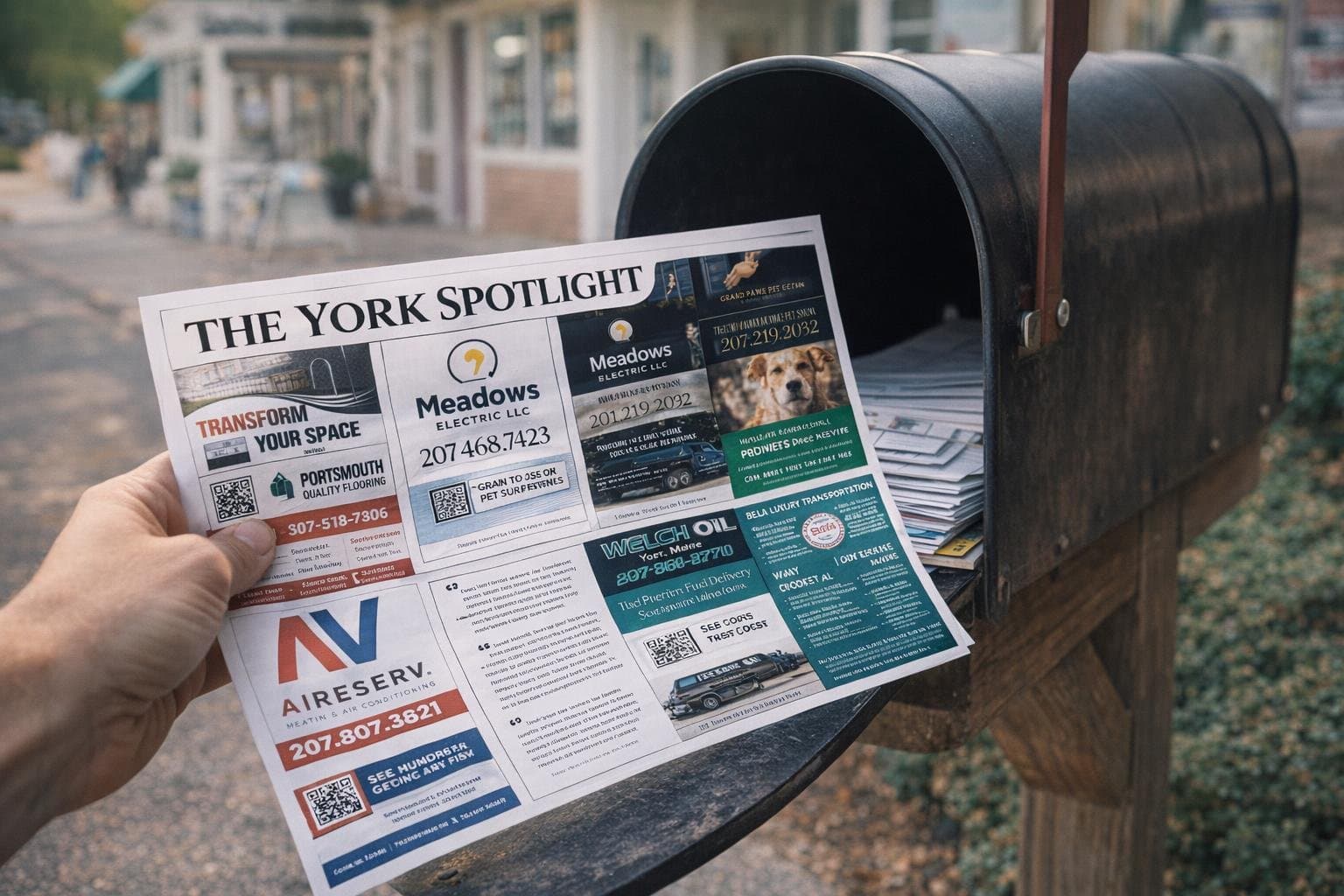
On a shared 9x12 card, a standard slot is $500 to reach 5,000 homes, or $900 for a double slot with more room. That works out to roughly 10 cents per household. Mailing your own 9x12 to 5,000 homes costs $2,999 All Inclusive through 9x12 Method Printing, postage included. Plumbers often move to 6 month or annual contracts because they budget in seasons and equipment cycles rather than month to month.
Only after confirming their service scope, because many shops do both plumbing and HVAC. If you already sold an HVAC slot and then sell a plumbing slot to a company that also does heating and cooling, you have put two direct competitors on the same card. Ask each business exactly what services they offer before selling the second slot. Also never put two plumbers on one card.
That is plumbing postcards. Emergency demand, real ticket values, customers who stay for a decade, and a pre-winter window every October that decides who gets the January panic calls. Pick one idea per card, mail before the freeze, make the phone number huge, confirm they do not overlap with your HVAC advertiser, and build the ad for them because they are under a sink.
Keep stacking wins. Let's go.
Ready to run your own card?
Get the course, scripts, tools, and weekly coaching inside the 9x12 Method community.

 Mitchell Tebo