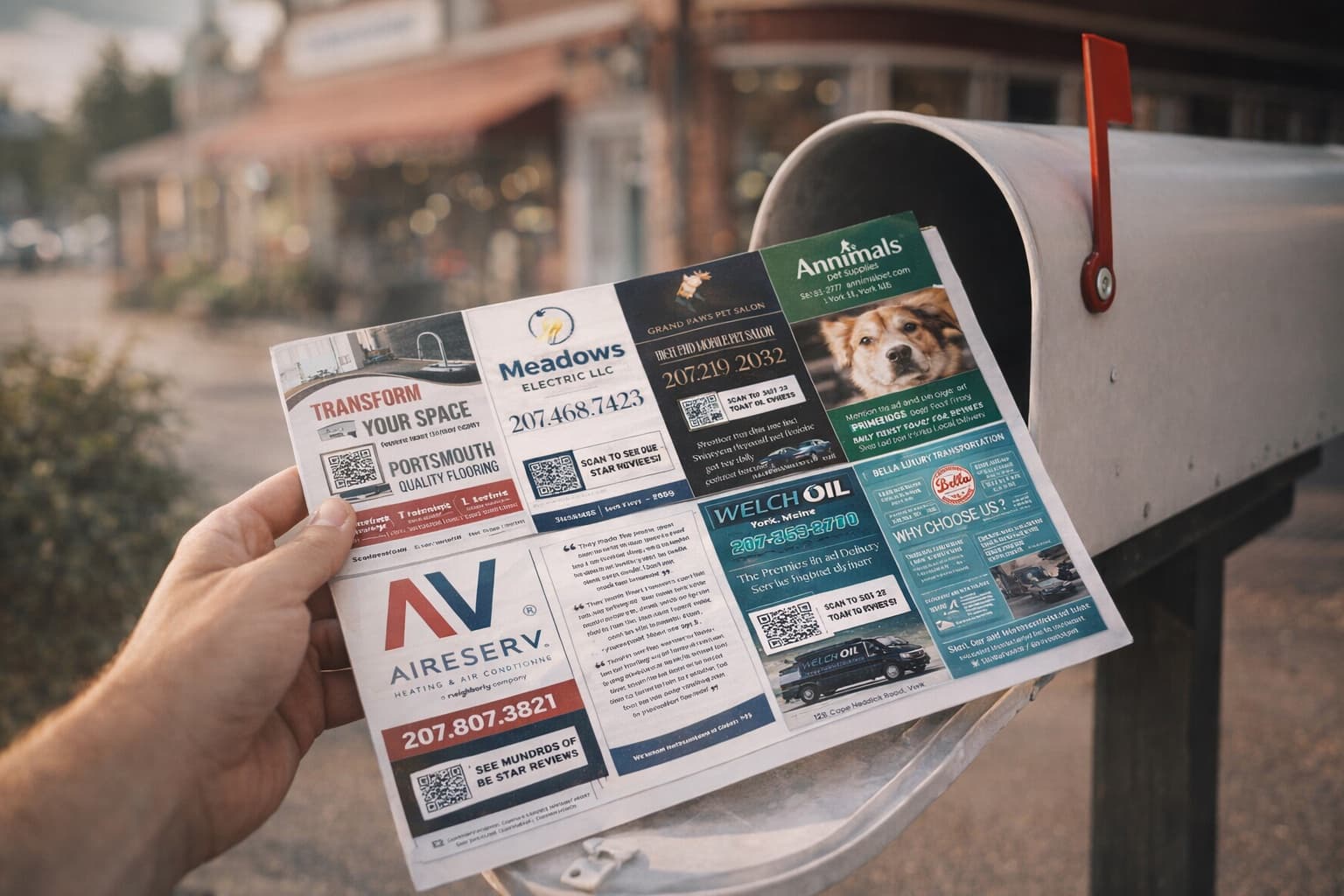
Auto shop postcard marketing that works. Why detailing and oil change close fastest, tire shop franchise plays, and the dealership trap to avoid entirely.
Hey, real talk. Auto is one of the most reliable categories on a 9x12 card, and almost nobody works it properly. Operators chase roofers and dentists while walking past six auto businesses on the same street. Here is what they are missing. Auto shop postcard marketing covers at least six distinct sub-niches that can all live on the same card without competing: general repair, oil change, detailing, tires, auto body, and window tinting. That is potentially six slots from one industry cluster. Michael closed a detail shop on a 4x3 in 5 minutes over the phone, and the owner had initially thought he was a scammer. Lucy signed Big O Tires because most locations are locally owned and the owner immediately saw the value. Let me break down which auto businesses close, which to skip entirely, and what each one needs.
This is the guide to working the auto category properly.
Four reasons this category punches above its weight.
Every household in your mailing area owns cars. You are not hoping a fraction of your 5,000 homes needs the service. Nearly all of them have at least one vehicle that needs oil, tires, and eventual repair. The addressable market is basically 100% of the card's reach.
Recurring service relationships. An oil change customer comes back three times a year for a decade. Auto repair is the same. One customer acquired from your card is worth years of revenue, which makes $500 trivially easy to justify.
Coupons work here. Auto is one of the few categories where a straight discount coupon genuinely drives behavior. "$25 off your first oil change" is the kind of thing people clip and stick on the fridge.
Six non-competing sub-niches. This is the underrated part. A general repair shop, an oil change place, a detailer, a tire shop, a body shop, and a window tinter are not competitors. They can all be on your card simultaneously. Most operators never realize this.
Auto is not one slot on your card. It is potentially six. General repair, oil change, detailing, tires, body, and tint are all separate categories that do not compete with each other.
Detailers close on offers and they close fast. Michael closed a detail shop on a 4x3 slot in 5 minutes by phone, and the owner had initially assumed he was running a scam.
Watch for barter. Robert traded a 9x12 slot for a free window tint job, no money exchanged. Decide up front whether you are willing to trade, because detailers will offer. If you actually want the service, it is a legitimate deal. If you need cash to hit your print cost, hold the line.
Pricing: $500 standard.
Pitch: "Spring car-detail season is your busy month. Your offer on 5,000 fridges in February means March is booked solid."
Oil change shops are the purest coupon play in the category. They understand direct mail because coupons are already how they acquire customers.
The big opportunity here is multi-location. Inacio got a big unexpected ad request from a multi-location oil change company for his MEGA Mailer. Multi-location oil change operations are genuine anchor opportunities because they will pay significantly more to cover their whole footprint.
Pricing: $500 standard, but multi-location operators will pay $1,500+ for coverage across their locations.
Pitch: "$25 off your first oil change is the kind of thing people clip and save. We always include a coupon ad for shops like yours."
Tire shops convert well, and the key insight is that most tire franchises are locally owned. Lucy signed Big O Tires for exactly this reason. Her framing on why it worked: most locations are locally owned, and the owner immediately saw how valuable the card could be.
She also used the competitor-scarcity close on a hesitating owner:
No problem, I don't want you to feel pressured. There's a Big O Tire near [another advertiser] and if you don't want it, I can ask them.
His response: "Nope, I want the spot cause I want those leads."
Pricing: $500 to $700.
Timing: Winter tire push in September and October.
Body shops are the most overlooked auto sub-niche. In hail-prone areas they pay top dollar after weather events, and they have genuine budget.
Pricing: $500 to $900. Push the double slot, since they need photo space to show repair quality.
Pitch: "Hail and storm season are coming. Homeowners need a name they trust before they need it."
Timing: Localized storm windows are huge spike opportunities. Watch your local weather.
Behaves almost identically to HVAC. Recurring service relationship, owner-operator decision making, comfortable with a $500 spend, responsive to seasonal pitches.
This is the single biggest time-waster in the auto category.
New-car dealerships almost never close. They have agency relationships and corporate marketing budgets that are locked in months ahead. The local sales manager cannot approve a $500 postcard slot without going through a chain that does not care about your card.
Skip them entirely unless you have a personal relationship with the owner. Your time is far better spent on the six sub-niches above.
Used-car lots are a different question. Some are excellent, some are not. Vet them. My rule on any questionable business: are they willing to serve the people of our town, and are they not a scammer? If yes, they are good. Your card carries your reputation into 5,000 homes, so do not put a business on it you would not personally recommend to a neighbor.
This isn't competing with that. It's owning the homeowner's choice when they have a fender-bender they don't want to claim on insurance. Those jobs are cash, and they go to whoever they remember.
Same math as everywhere else, but auto makes it especially easy. "$500 across 5,000 homes is a dime a door. Every one of those households owns a car. What's one new regular customer worth to you over five years?" An oil change shop does that math instantly.
Each sub-niche needs different visuals. Get these right.
All auto ads need: shop name, services listed briefly, a real coupon ($25 off, free tire rotation, $50 off detail), phone, address, hours, and ASE certification logos where applicable.
Detailing: Photo of a clean car. Before and after if they have it.
Tire shops: Brand logos (Goodyear, Michelin) along the bottom. Those logos do real trust work.
Body shops: Before and after repair photo, plus an "insurance accepted" line.
Color guidance: Blacks and reds for performance and detailing. Blues for general repair, since blue reads as trustworthy. Greens for eco-friendly oil change positioning.
Put a tracked QR code on every auto slot through ScanLab or any QR tool with analytics. Auto coupons get redeemed in person, so pair the QR with a redemption code so the shop can count both scan traffic and walk-ins. That combined number is what earns you the renewal.
Full transparency, the auto scripts, the sub-niche pitch variations, and the barter negotiation guidance all live inside the 9x12 Method community. You do not need to join to walk into an oil change shop and offer them the coupon slot. The community is the support layer for when a multi-location operator asks about covering their whole footprint and you need to price it.
Yes, auto is one of the most reliable categories on a 9x12 card. Every household in your mailing area owns vehicles, auto is a recurring service relationship worth years of revenue per customer, and coupons genuinely drive behavior in this category. Michael closed a detail shop on a 4x3 slot in 5 minutes over the phone. Lucy signed Big O Tires because most tire franchise locations are locally owned and the owner immediately saw the value.
Potentially six, because auto splits into non-competing sub-niches: general repair, oil change, detailing, tires, auto body, and window tinting. A detailer does not compete with a tire shop, and an oil change place does not compete with a body shop. What you cannot do is put two general auto repair shops on the same card, which is the same conflict as two roofers or two pizza places.
No, skip new-car dealerships unless you have a personal relationship with the owner. They have agency relationships and corporate marketing budgets locked in months ahead, and the local sales manager cannot approve a $500 slot without a corporate chain that does not care about your card. Used-car lots can work, but vet them carefully since your card carries your reputation into 5,000 homes.
A specific dollar-value coupon that people will clip and save. "$25 off your first oil change" is the classic and it works because oil change shops already acquire customers through coupons. For detailers, "$50 off a full detail." For tire shops, free rotation with purchase. Always pair the coupon with a redemption code so the shop can count walk-ins alongside QR scans, since auto coupons get redeemed in person.
February and March for spring detailing season, March and April for tax refund season (an underrated window when people upgrade tires and detail cars as refunds hit), April and May for pre-summer oil change and road-trip prep, and September and October for the winter tire push. Auto body shops should mail into localized storm and hail windows, which are unpredictable but produce huge spikes.
$500 is standard for detailing, general repair, and window tinting. Tire shops run $500 to $700. Auto body shops go $500 to $900 and you should push the double slot since they need photo space to show repair quality. The biggest opportunity is multi-location oil change operations, which will pay $1,500 or more to cover their entire footprint. Inacio received a large unexpected ad request from exactly that kind of chain.
That is auto shop postcard marketing. Six non-competing sub-niches, a category where literally every household is a prospect, and clean seasonal timing you can plan around. Work the commercial strip, skip the dealerships, push doubles on body shops, and chase the multi-location oil change operators for the big tickets.
Keep stacking wins. Let's go.
Ready to run your own card?
Get the course, scripts, tools, and weekly coaching inside the 9x12 Method community.

 Mitchell Tebo