Chimney sweep marketing that fills the slow months: when to mail before the fall rush, what to put on the card, and what a $500 slot costs per booked sweep.
Most chimney sweep marketing advice has the same blind spot. It tells you to get in front of homeowners before winter, which is exactly when your phone is already ringing and your calendar is already full. The sweeps who make real money don't need more calls in November. They need calls in April, May, and June, when the trucks are sitting still. So let's talk about marketing that fixes both ends of the year, with real numbers on what a postcard costs you per booked sweep.
Here's the thing. Your business has a rush built into it. Folks who build software for sweeps put the chimney sweep busy season at October through January, with late July through September as the setup window before it hits. You already know this. The first cold snap, everybody lights a fire, somebody smells smoke in the living room, and suddenly you're booked three weeks out.
That means the money problem isn't "how do I get more customers." It's "how do I spread the customers I could get across 12 months instead of four."
And you've got a secret weapon most trades would kill for. The fire safety standard says the chimney gets looked at every year. CSIA quotes NFPA 211 right on its homeowner FAQ: "Chimneys, fireplaces, and vents shall be inspected at least once a year for soundness, freedom from deposits, and correct clearances. Cleaning, maintenance, and repairs shall be done if necessary." CSIA recommends annual inspections even for chimneys in gas-heated homes.
Every customer you get is supposed to need you again next year. That's not a one-time job. That's a recurring customer, if you handle it right.
You're not buying a phone call. You're buying a homeowner who's supposed to call you every single year.
So two sweeps pays for the ad. Then year two is the gravy, because that same homeowner is due again. Keep one customer for three annual sweeps at that average and that's $822 from a single household, against a $500 slot. Plus whatever the inspection turns up: a cap, a crown, a liner, a damper. I'm not going to put numbers on repair work because they swing all over the place, but you know better than anybody what one bad crown is worth.
Look, that $274 is a national average, not your price, and revenue isn't profit. Nobody can promise you a number of calls, and results vary. So plug your real sweep price into the free postcard ad payback calculator and see exactly how many jobs it takes to cover the ad in your town.
Most chimney cleaning advertising runs one message: "get swept before winter." That's fine. But if you only mail once, you're mailing into the busiest part of your year. Run two cards instead.
This one lands before the rush, while homeowners still think they have time. The message is simple: book now, before the wait list. HomeYou even notes that sweep prices can rise during peak heating season and for short-notice jobs, so a homeowner who books early is doing themselves a favor. Say that on the card.
October's the classic chimney mail month, and it still works in a lot of markets. But if your calendar fills by mid-October, mail in late August or September so the card is on the fridge before the first cold night, not after.
This is the one nobody runs, and it's where your slow months get filled. Heating season is over, the fireplace is cold, and you've got open dates. The annual inspection is due either way, so why not now?
Your pitch on this card: "No wait, no rush, no soot in the living room during the holidays. Get your annual sweep and inspection done now and you're set for fall." And if a winter of fires did any damage, the homeowner finds out in May instead of on the first cold night.
Mail window
What homeowners are thinking
Offer that fits
March to May
"The fireplace season is over"
Spring sweep + inspection, no wait
June to July
Not thinking about it at all
Skip, or a cap and crown repair offer
August to September
"We'll need it soon"
Beat the fall rush, book your date now
October
"It's getting cold"
Last call before the wait list
November to February
Using the fireplace
Skip, you're booked
My month-by-month mailing calendar shows where this fits next to every other industry, if you're curious what else is landing in the mailbox the same week.
The headline is the reason to call this week. Chimney sweep postcards live or die on the headline. A few that fit a slot:
"Beat the Fall Rush: Book Your Sweep + Inspection Now"
"Spring Chimney Sweep: No Wait, No Holiday Mess"
"Annual Chimney Inspection: Is Yours Due?"
"Sweep + Dryer Vent Cleaning, One Visit"
That last one is worth a look if you do vents. Bundling a related service with the sweep raises the ticket without making the card a menu. If you don't do vents, a free cap check or a free photo of the inside of their flue works the same way. Most homeowners have never seen inside their chimney. Show them, and the repair conversation starts itself.
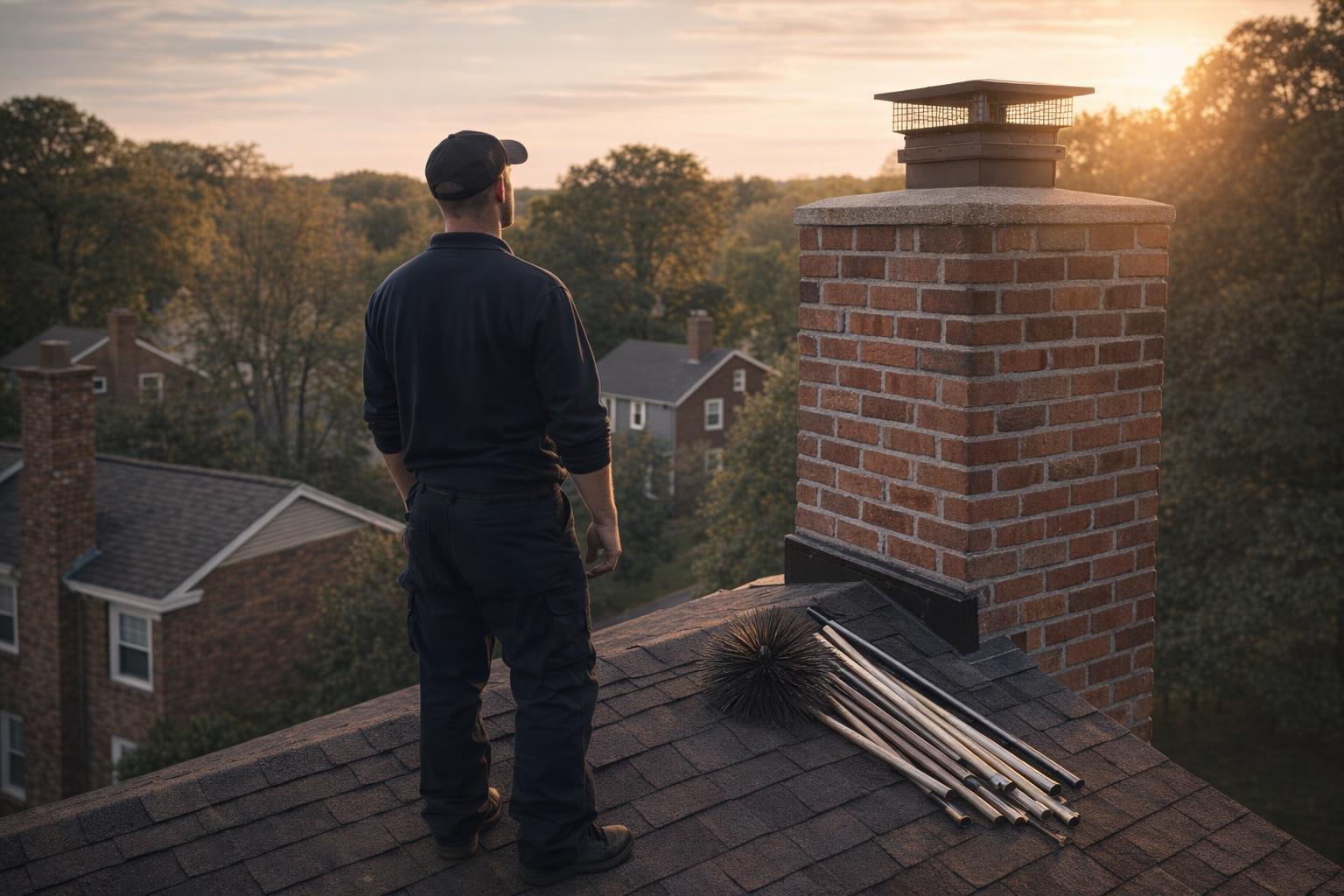
Your tech on the roof in uniform, on a house that looks like the houses on the route. Or a clean flue next to a nasty one. Your own photos. Never stock. Homeowners can smell stock, and this is a trade where trust is the whole sale. You're going to be inside their house, near their fireplace, with a vacuum.
Okay so let's talk money. Forget cost per home for a second. What you care about is cost per booked sweep.
Option 1: mail your own card. Printing 5,000 9x12 cards through 9x12 Method Printing is $1,309 for Print Only, and EDDM Retail postage is $0.26 per piece as of July 12, 2026 (per the USPS EDDM page). Call it $2,609 before design and the post office paperwork, or $2,999 with our All Inclusive package where we print, prep, and mail it for you. At a $274 sweep, a solo card needs around ten sweeps just to cover itself on Print Only, or about eleven All Inclusive.
Option 2: buy one slot on a shared card. $500 for the same 5,000 homes. At $274, that's two sweeps.
That's why, for most one and two-truck sweeps, a slot is the smart place to start. Most operators take only one business per category on a card, so you'd be the only chimney sweep on it. Ask about that before you buy.
A solo card makes sense once you've got crews to keep busy. If that's you, my EDDM postcards page shows how we print and mail one for a business. One USPS detail if you go solo: a 9x12 is a "flat" in USPS terms, not a postcard, so leave the word "Postcard" off the printed piece.
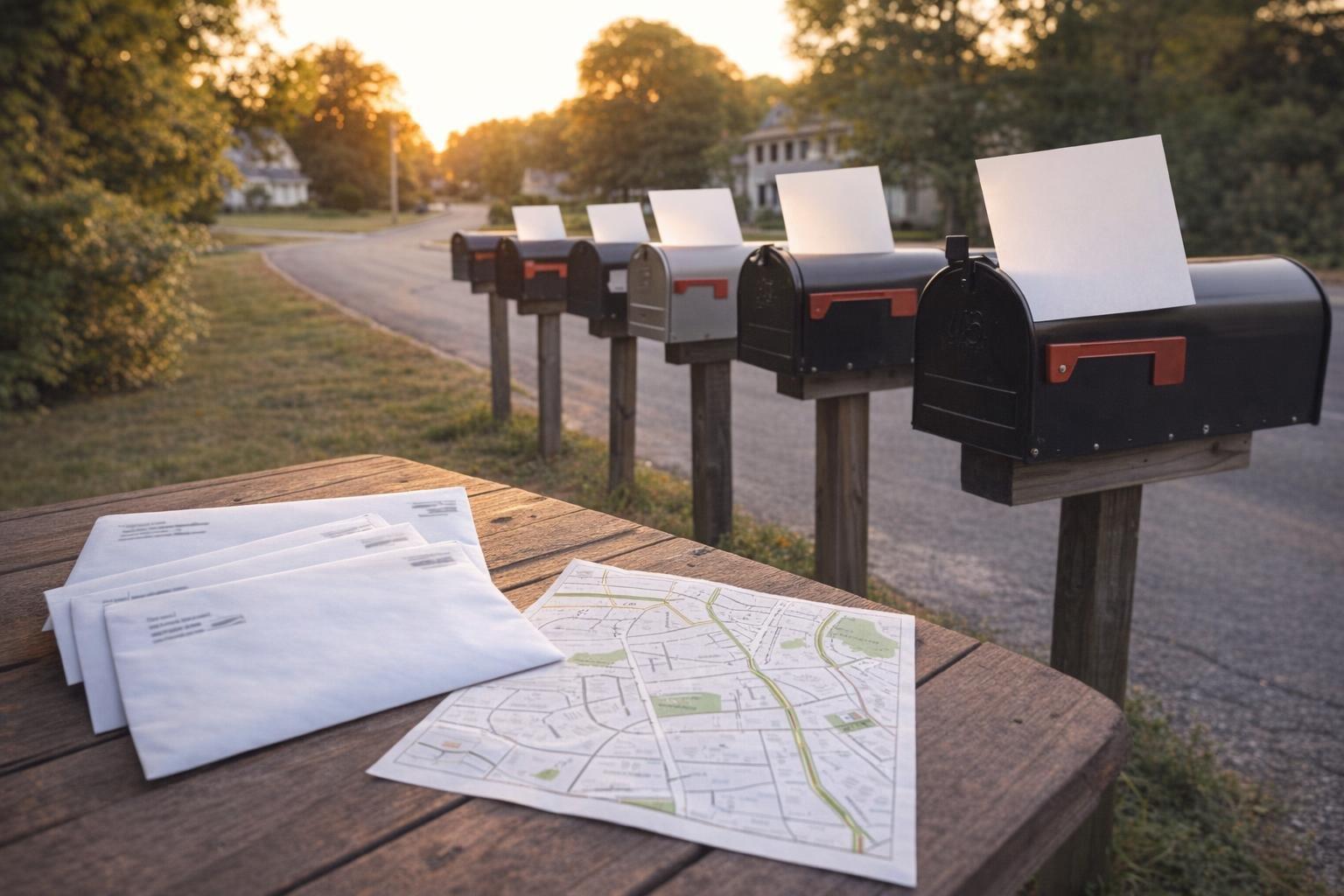
Here's something none of the chimney marketing guides mention. EDDM goes to every address on a carrier route (or every residential address, if you pick residential only). You don't pick houses. You pick routes.
So the route IS the targeting. And for a sweep, the question is brutally simple: do these houses have chimneys? A route full of new apartments is hundreds of mailboxes and probably zero sweeps.
Sort for routes with a high single-family share and a high owner-occupied share. Owners hire sweeps. Renters usually call the landlord.
Check median home value and median year built, then flip the map to satellite view to get a feel for the streets and the houses on each route.
Then do the part no data can do. Drive a few streets on your top routes and look up. Count the chimneys. Ten minutes in the truck beats guessing.
Mail the routes where the rooftops say yes. Skip the rest.
If you're buying a slot on somebody else's card, ask which routes it's going to. A good operator will tell you straight, and you can do the same drive.
This is the part that turns a $500 ad into a customer list. The postcard gets you the first sweep. You get every one after that.
Ask every new caller how they found you. Write it down. Make the card offer card-only ("mention the mailer") so you can count it.
Do the inspection like it matters. Show them the photos. That's the whole retention plan.
Book next year on the spot. Spring customer? Put next spring on the calendar while they're standing there. If they won't commit, put them on a reminder list and reach out before your next off-season card.
Count it at the end of the season: card customers, how many rebooked, and what they're worth next year. Compare that to the $500.
If you want a scan count too, put a trackable QR code on the slot. Operators in our community use ScanLab for that. Here's my full guide to tracking direct mail results.
And give it more than one card. A spring card and a fall card from the same sweep, year after year, is how a name starts to feel familiar.
If you run a postcard business, sweeps are an underrated category. I've said it before: I'd look at some seasonal guys like chimney sweeps, gutter cleaning, home cleaning. Most are owner-run, so you're talking to the person who signs the check.
The timing is the whole trick. Don't call a sweep in November and expect them to care. They're on a roof.
Sell the fall card in July and August. That's their setup window, before the phones blow up.
Sell the spring card in January and February. Lead with the slow months: "What does your calendar look like in May?"
Sell both at once. Michael, one of our members, runs his cards seasonally, spring, summer, fall, winter. A sweep is a perfect two-season advertiser.
You'll hear "we're already booked" in the fall. On one of our coaching calls, the answer was to dig one level deeper. Are they actually booked out, like they couldn't take another customer? Then don't sell them anything, there's no need. But if it's really "I don't think I need advertising," explain that the power comes over time. It takes time to become the sweep people think of when they need one. And notice, if you'd called them in the slow season, the excuse would have been "it's my slow season, nobody needs it." That's why the spring card pitch matters.
Watch the overlap with fireplace shops, some HVAC companies (here's how I sell HVAC postcards), and gutter companies that sweep on the side (my window cleaning postcards guide covers that crowd). Ask what each company offers before you sell both slots.
Full transparency, I don't have a chimney sweep's call log to share yet, and I won't make one up. The exact scripts and follow-ups we use live inside the 9x12 Method community. You don't need it to get started. It just saves you time.
They can, because chimney work has a built-in repeat. NFPA 211 calls for an inspection at least once a year, so one customer can be worth more than a $500 shared slot over time. Results vary and nobody can guarantee calls. The money comes from rebooking the people the card brings in.
Run two cards. A pre-season card in August or September, before the October to January rush fills your calendar, and an off-season card in March to May to fill the slow months. Skip mailing in the middle of winter, when you're already booked.
Give homeowners a reason to book in spring: no wait, no mess before the holidays, and the annual inspection that's due anyway. Spring is also when winter damage like a cracked crown or missing cap shows up. Mail that message in March to May, and book next year's visit before you leave every job.
Lead with one seasonal offer, like "Beat the Fall Rush" or "Spring Sweep: No Wait." Add one real photo of your tech on a local roof, two or three services max, "Licensed and Insured," CSIA certified only if you hold it, a QR code to booking, and a big phone number.
A solo 9x12 to 5,000 homes is about $2,609 with Print Only printing and EDDM Retail postage at $0.26 per piece (as of July 12, 2026), before design and prep, or $2,999 All Inclusive. A slot on a shared 9x12 is $500 for the same 5,000 homes, and a community card slot is $250 for 2,500. At a $274 average sweep, that's roughly ten sweeps, two sweeps, or one.
EDDM lets you pick carrier routes, not individual houses. Use the free route planner to find routes with mostly single-family, owner-occupied homes, then drive the best ones and count chimneys. Mail where the rooftops say yes.
That's chimney sweep marketing. Two cards a year instead of one, a real photo, one offer, routes with actual chimneys, and next year's visit booked before you leave the driveway. The card gets you the first sweep. You keep the customer.
As always, I'm rooting for you. Peace.
Ready to run your own card?
Get the course, scripts, tools, and weekly coaching inside the 9x12 Method community.

 Mitchell Tebo