Direct mail marketing for small business, step by step: pick list vs EDDM vs a shared card, build the offer, budget with real 2026 prices, and track every call.
Most small business owners don't skip mail because it failed. They skip it because nobody ever showed them how to do it without lighting a few thousand dollars on fire. So let's fix that. This is direct mail marketing for small business the way I'd explain it to a friend in the car: real dated prices, the offer that makes people call, and how to know if it worked.
Full transparency up front. I run a print shop and a community for people who sell ad spots on shared postcards. I'll show you where we fit. But I'll also show you the do-it-yourself math, so you can judge any quote you get, including mine.
Watch: 9x12 Marketers: These offers will blow up your client’s business. · Summary and transcript
Here's the thing. Direct mail is just paying to put your offer in a physical mailbox. That's it. The only real decisions are who gets it, what it says, and how many times they see it.
There are four ways a small business can do it:
Your own customer list. You mail people who already bought from you. Smallest list, warmest people.
A rented or bought mailing list. You pay for names and addresses that match a profile (homeowners, a certain income, new movers). Then you pay addressed postage on every piece.
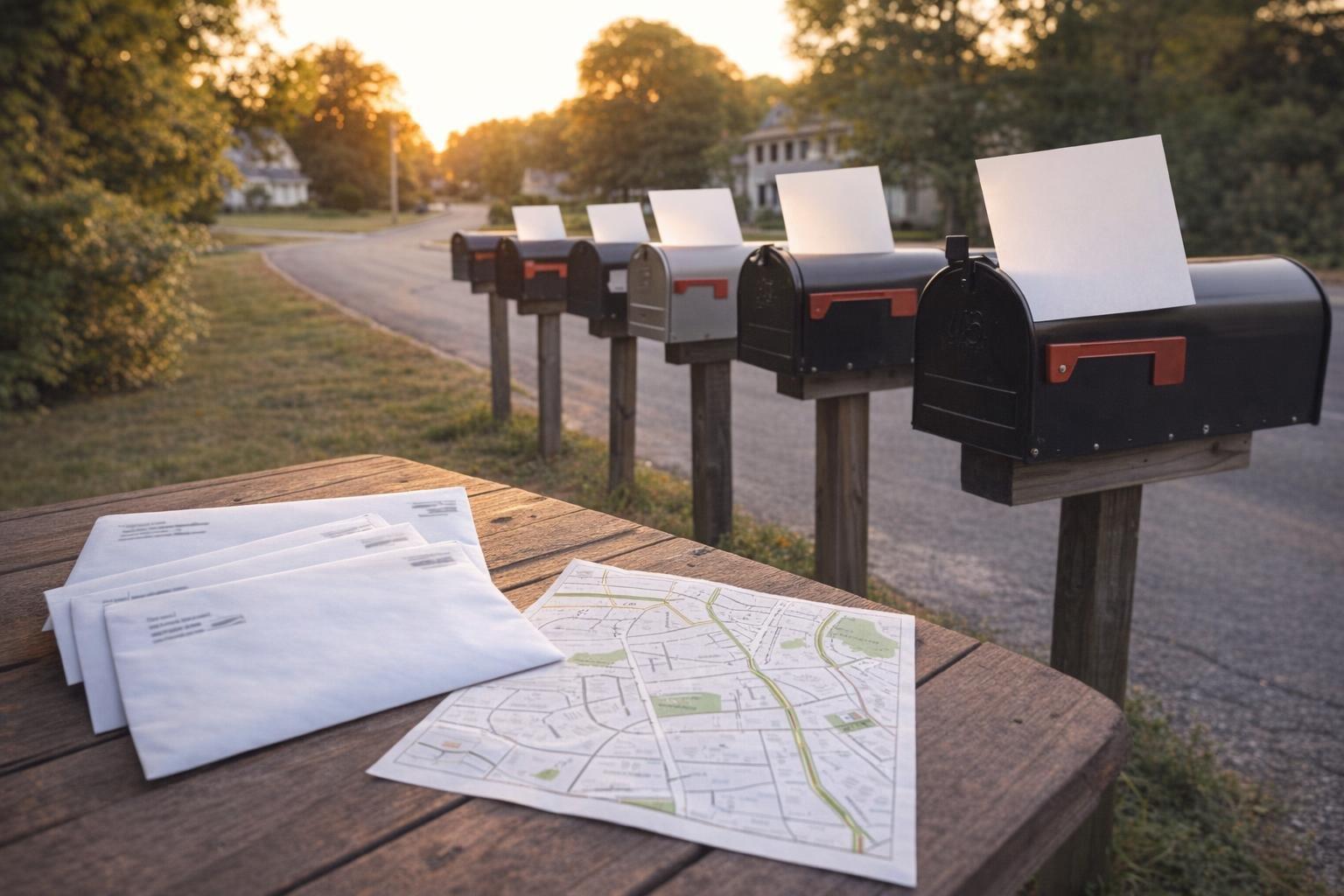
Every Door Direct Mail (EDDM) on your own. No list at all. You pick USPS carrier routes on a map, and every address on those routes gets your card, addressed to "Postal Customer." It's mailed as USPS Marketing Mail.
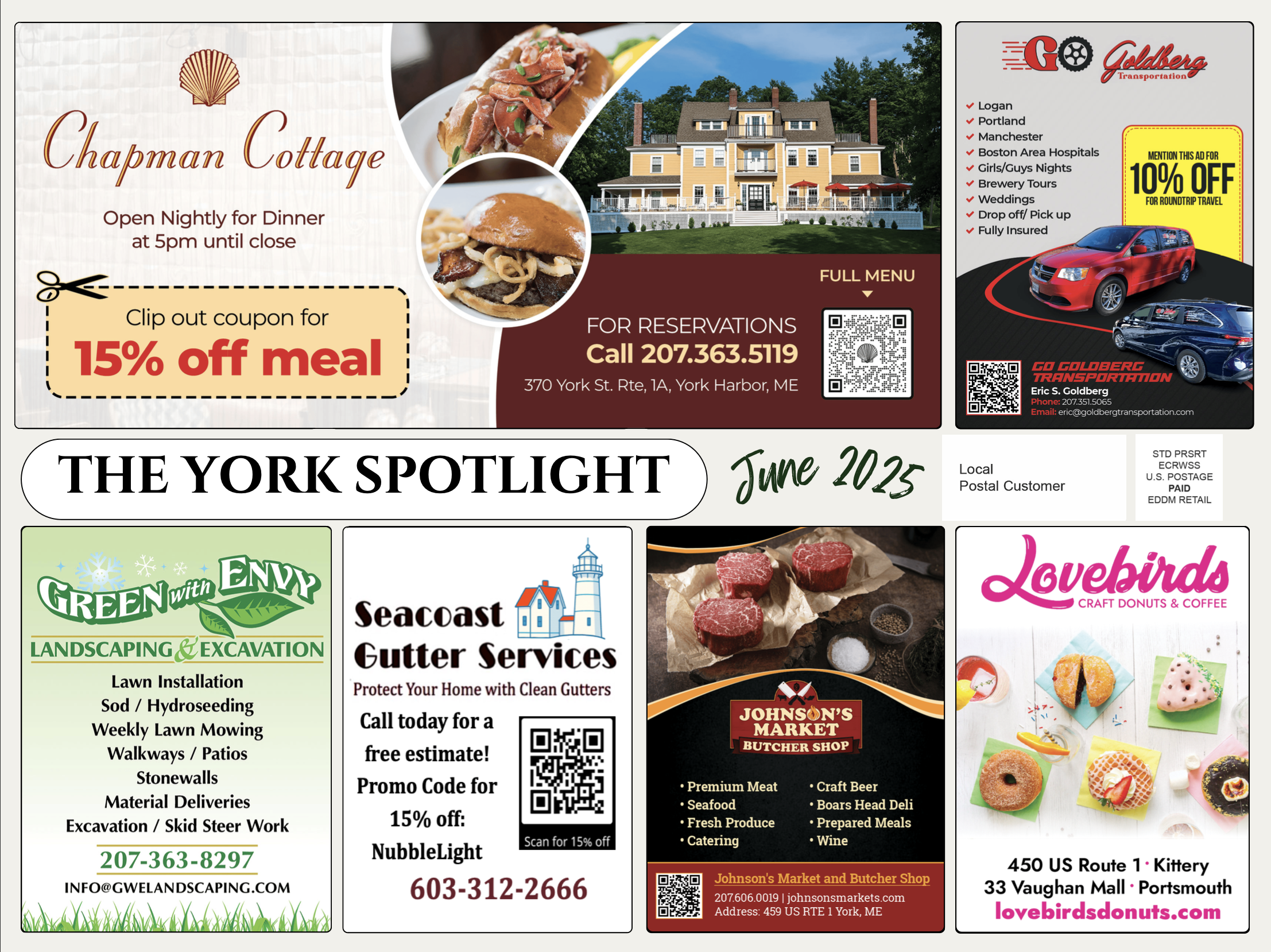
A spot on a shared postcard. A local operator mails one big card with around 16 non-competing businesses on it, and you buy one spot.
Each one fits a different budget and a different goal. Let me break it down.
Look. There's no single right answer for small business direct mail. But there is a right answer for where you are right now.
Mail your own customers when you want repeat business. 300 past customers at a $0.65 postcard stamp (July 2026) is about $195 plus printing, and these people already know you. The catch: it doesn't bring in anyone new.
Rent a list when your customer is narrow. If you only want homeowners with pools, or businesses with 20+ employees, a list makes sense. You pay for the list plus addressed postage on every piece, so the price per home climbs fast. List prices swing a lot by vendor and filter, so get two quotes. I put the real postage for both side by side in EDDM vs targeted direct mail.
Use EDDM when your customer is "anybody who lives near me." Plumbers, HVAC, dentists, pizza places, roofers, landscapers. If nearly every household around you is a possible customer, you don't need a list. You need every door. That's EDDM. My guide on whether EDDM is worth it goes deep on the pros and cons.
Buy a shared spot when you want to test cheap. A shared card splits the printing and postage across about 16 businesses, so you reach the same 5,000 mailboxes for a fraction of the cost. The trade-off is space: your ad is a box on a big card, not the whole card.
Okay so, here's how to do direct mail marketing from zero to cards in mailboxes.
Pick one goal. New customers, repeat customers, or filling a slow month. One card can't do all three.
Decide who gets it. Your list, a rented list, or the carrier routes around your shop. For routes, our free EDDM route planner shows each route's homes, income, and home values side by side.
Budget for more than one mailing before you judge it.
Build the offer, then design the card around it with a phone number and a way to track it.
Print and mail it. Do the EDDM paperwork and drop-off yourself, or pay someone to handle it.
Count the calls, codes, and scans from the day it lands, then change one thing for the next drop.
I see this ALL the time. A business gets a beautiful card designed, and the ad says something like "Visit our location. We're great."
Honestly? That's like inviting someone to a party and not telling them there's free food. You left out the most important part.
A good offer answers the two questions every person holding your card is asking:
Why should I try you?
Why should I try you right now?
Compare these two chiropractor ads. Option A: "Local chiropractor, friendly staff, walk-ins welcome." Option B: "$29 new patient special. Includes exam, X-rays, and first adjustment." Which one makes people pick up the phone? Exactly.
Here are offers I like by business type:
Restaurants: buy one entree, get one free. Or 20% off lunch Monday through Thursday, because those are usually the slow days.
Gyms and studios: first class free, or a week pass for $1.
Auto repair: free brake inspection and $20 off any repair. The free part gets them in. The trust gets you the repair.
Retail: spend $50, get a $10 gift card.
And if you're scared of discounting, do the math on what a customer is worth over time. Say a massage place runs a buy one, get one half off deal and gives up $30 on the second massage. If that new client comes back monthly for 6 months, that $30 turned into $360 in revenue. That's not a loss. That's what it cost to get a customer.
Two more rules for the offer. Make it the biggest thing on your ad, not buried at the bottom. And give it an expiration date. A deadline is what turns "huh, nice" into a phone call.
Here's a sample solo card. Look where your eye goes first.
That's a sample design, not a real company, so it skips the phone number and the "Postal Customer" line a real card needs. But notice the layout: the $49 offer box is the loudest thing on the card. My post on how to design a postcard ad that converts covers headline size, photos, and contact info in detail.
Now the boring part that matters. If you mail with EDDM Retail, USPS has rules:
Size: at least one side has to be longer than 10.5 inches, or taller than 6.125 inches, or the piece has to be thicker than 0.25 inch. Max is 15 x 12 inches, 0.75 inch thick, 3.3 ounces. A 6x9 doesn't qualify. A 9x12 does. My EDDM size requirements guide checks every common size.
Address block: every piece needs "Postal Customer" (adding "Local" is optional) AND the EDDM Retail indicia in the postage corner. Both, not either one.
Minimum: 200 pieces per mailing (not per route), and no more than 5,000 per mailing per day at one Post Office.
Don't print the word "Postcard" on a 9x12. In USPS terms a 9x12 is a flat, not a postcard, and the DMM says non-postcards must not carry that word. Leave it off.
Let me break down what direct mail for small business costs with real numbers, because the guides ranking for this either give undated prices or none at all. These are our current print prices, USPS postage as of July 12, 2026, and typical shared spot prices.
Your own 9x12 card, printed and mailed (All Inclusive, postage included):
$779
1,000 homes
$1,649
2,500 homes
$2,999
5,000 homes
About 60 cents
Per home at 5,000
Doing EDDM yourself: postage alone for 5,000 pieces is $1,300 at $0.26 each. Then add printing and your time bundling the cards and hauling them to the Post Office. Our Print Only price for 5,000 9x12 cards is $1,309, so the do-it-yourself total is about $2,609 plus your afternoon. My EDDM cost breakdown walks through every line.
A shared card spot: $500 for a spot on a 9x12 that goes to 5,000 homes, or about $250 on a 6x11 community card that goes to 2,500 homes. Either way that's about 10 cents a home. Check with the operator in your town for their actual price and routes, and read my guide to shared postcard advertising before you buy.
Forget response rates. Most vendor pages quote one, none of them can tell you what yours will be, and your town isn't their town.
Here's the only math you need: cost of the mailing divided by what one new customer is worth to you.
A $500 spot, and a new customer is worth $400 to you? You need 2 customers to pay for it.
A $2,999 solo card, and a new customer is worth $1,500? You need 2.
A $500 spot, and a customer is worth $80? You need 7.
If that last number makes you nervous, the fix usually isn't to skip mail. It's to make the offer pull in people who come back, so one customer is worth more than one ticket.
If you can't tell which calls came from the card, you'll end up guessing. And guessing is how good campaigns get cancelled.
Pick at least one of these and put it on the card:
A promo code ("Mention code MAIL20").
"Bring this card in" for the discount. Honestly my favorite, because it's dead simple for the customer and you get a physical count.
A QR code that goes to a page only the card points to.
A separate phone number that only appears on the card.
Here's a real shared card. Look at the gutter company's spot in the bottom row. Free estimate, a QR code for 15% off, a promo code, and a big phone number. That's an ad you can track.
One more thing. Start counting from the day the cards land, not the day you mail them. USPS doesn't guarantee a delivery window for Marketing Mail, so don't put a deadline on the card that's tight to your mail date. My guide to tracking direct mail results has the full setup.
More than once. I know that's not the answer people want.
Here's why. People don't need a plumber the day your card shows up. They need one the day the water heater dies. Mail works because the card sits on the counter, and because they've seen your name a few times by the time they need you.
Look at what real advertisers on our members' cards have seen:
Lucy's butcher shop advertiser got 6 phone calls the day the cards landed. Their words: "I had six phone calls today. I was able to sell half a beef and half of a hog." That's a $1,600 half beef, a half hog, and 100 pounds of ground beef.
Ryan's dumpster rental client booked 3 jobs within days of the mailer landing. Each job paid for the ad spot 7 times over, and he asked when the next mailer goes out.
Darin's HVAC advertiser sold a full furnace plus install from the card.
Ben ran his own ad for his sharpening business. His first customer call came 14 days after the cards landed. "These cards do NOT just go straight to the trash can."
Rachel put her own real estate investing ad on 4 community cards. A homeowner texted them (Rachel and her husband), and it turned into a signed contract worth about $100,000 in profit.
Notice the spread. Some calls came day one. Ben's came at two weeks. Rachel's came after several cards. That's why you budget for more than one drop.
Mail isn't sexy. That's why it works. Your competitors stopped mailing years ago. Your customers never stopped checking the mailbox.
If you'd rather do it all yourself, that's honestly fine. Here's where we come in if you want help:
Want your own card done for you? Our EDDM mailing page for business owners handles design, printing, postage, and the Post Office drop. Full card design is $60.
Want to be on the other side of this? Some business owners read all this and realize they'd rather sell the spots than buy them. Full transparency, that's what I teach inside our community, but you don't need it for anything in this post.
A shared 9x12 spot is about $500 to 5,000 homes. Your own 9x12 printed and mailed is $779 for 1,000 homes or $2,999 for 5,000 with our All Inclusive printing, and EDDM postage alone is $0.26 a piece (July 12, 2026).
No. Every Door Direct Mail lets you pick carrier routes on a map and mail every address on them, addressed to "Postal Customer." You only need a list if your customer is narrow, like pool owners or businesses of a certain size, or if you're mailing past customers.
For EDDM Retail, go bigger than a 6x9: a 9x12 qualifies and gives your offer room to be big. A standard 4x6 postcard works for mailing your own customer list with a stamp.
EDDM Retail needs at least 200 pieces per mailing. For a first test, a shared card spot is a low-cost way to reach thousands of homes. If you mail your own card, start with a few routes near your shop and plan for more than one drop.
USPS doesn't guarantee a delivery window for Marketing Mail. Plan your mail date with a cushion before any deadline in your offer, and measure responses from the day the cards actually land.
Honestly, test both. Ads reach people while they scroll and vanish when they stop. A card reaches every home on your routes, including the people who never scroll, and it sits on the counter until they need you. Track each one separately and keep the one that brings in customers.
As always, I'm rooting for you. Peace.
Ready to run your own card?
Get the course, scripts, tools, and weekly coaching inside the 9x12 Method community.

 Mitchell Tebo