Shared Postcard Advertising: Cost and How It Works
Shared postcard advertising puts your business in 2,500 to 5,000 local mailboxes for about 10 cents a home. What a slot costs, what you get, and what to ask.
Somebody just handed you a big postcard covered in local business ads and asked if you want a spot on the next one. Now you're wondering if it's a smart way to get new customers or just one more bill. Fair question. I'm going to walk you through shared postcard advertising the way I'd explain it to a friend who owns a shop: what it is, what a slot costs, how that compares to mailing your own postcard, and when it's honestly not a fit.
I'm Mitchell Tebo, founder of the 9x12 Method. I've watched a lot of local businesses advertise on these cards, and the difference between the ones who win and the ones who waste money is almost never luck.
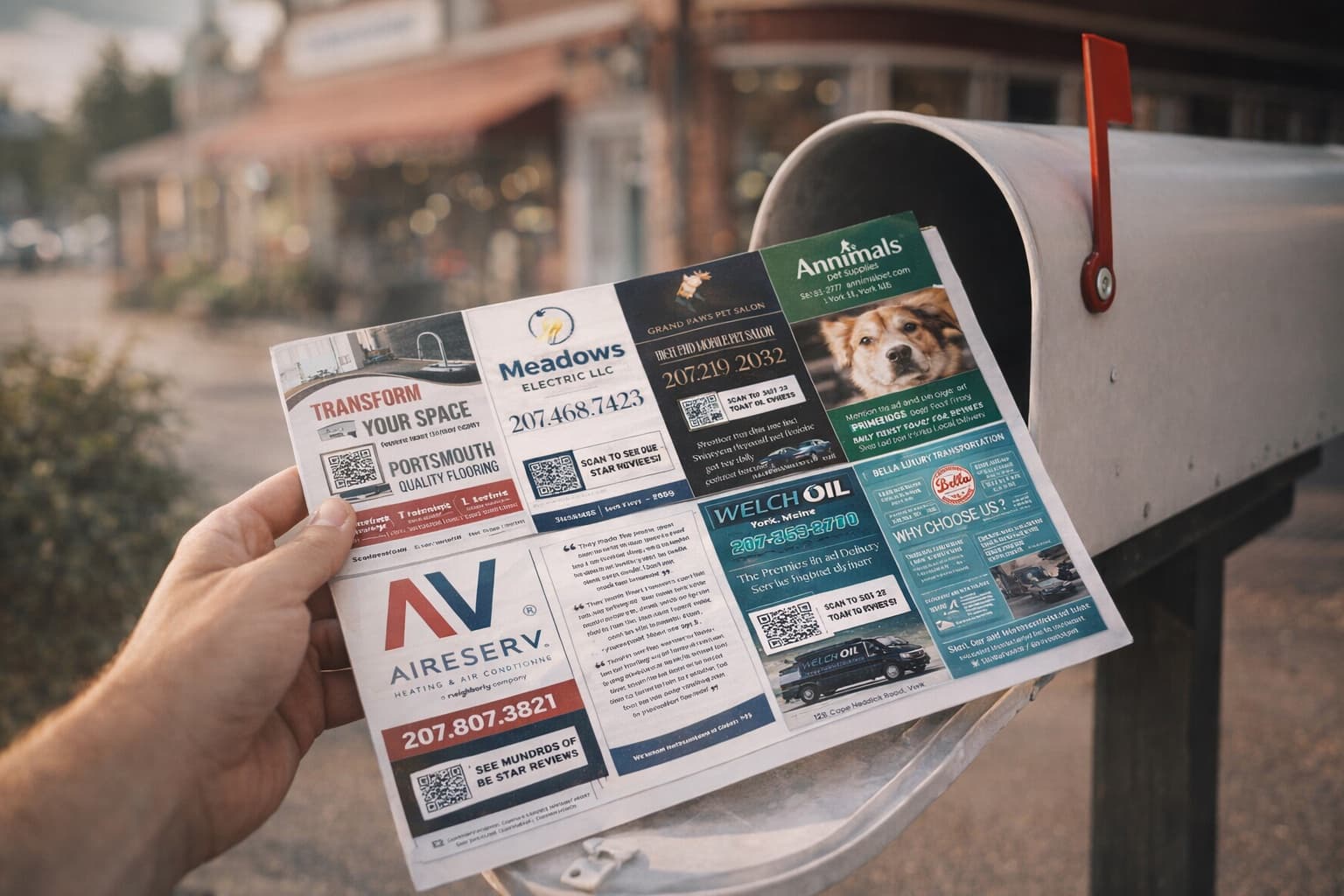
A group of local businesses splits the cost of one big postcard. Each business gets its own ad slot, and the whole card gets mailed to every home on a set of mail routes in your area.
The person running it is called an operator. They sell the slots, build the ads, print the card, and get it to the post office. You pay for your slot, send your logo and offer, and a few weeks later you're in thousands of mailboxes.
Delivery runs through Every Door Direct Mail, a USPS program built for local businesses. No mailing list. Pieces are addressed to "Postal Customer," and the carrier drops one in every mailbox on the chosen routes. The whole neighborhood gets it.
You'll usually get pitched one of two formats:
The 9x12 card. A huge 9 by 12 inch postcard with about 16 slots, mailed to 5,000 homes. Slots typically run $500. It's the biggest thing most people get in their mailbox all month.
The community card. A 6 by 11 inch card with about 16 coupon-style slots, mailed to 2,500 homes. Slots typically run $250.
The rule on both: one business per category. One roofer. One dentist. One pizza place.
You're not just buying ad space. You're buying the only roofer spot (or dentist spot, or pizza spot) in thousands of local mailboxes.
Okay so why not just mail your own postcard? You totally can. Most people never actually calculate the cost per home for direct mail, so let's do it with real print prices for runs like these, plus about 26 cents a piece in USPS postage.
Your own card
Printing
Postage
Total
Per home
1,000 homes (6x11)
$369
$260
$629
About 63 cents
2,500 homes (6x11)
$639
$650
$1,289
About 52 cents
5,000 homes (9x12)
$1,309
$1,300
$2,609
About 52 cents
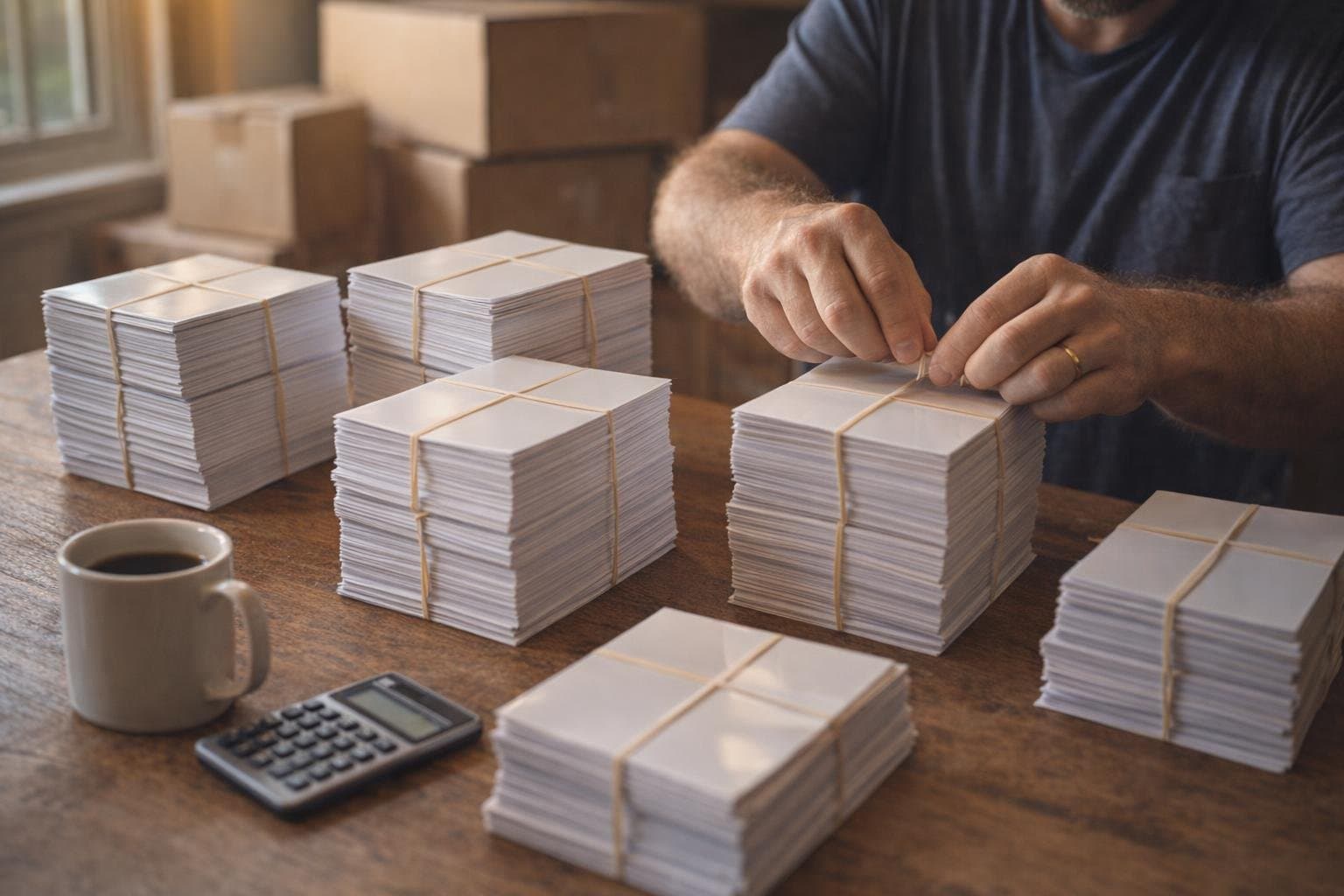
And that's before design, bundling the cards, and the post office paperwork, which you'd either do yourself or pay someone to handle.
A shared slot costs about one fifth as much per home as mailing your own card. That's the whole reason shared mail exists. It is that simple.
And full transparency, the operator makes a profit when the card fills. That's how they get paid for selling 16 slots, building the card, and handling the mail. You pay a dime instead of 50 cents because they did the legwork.
To be fair, your own card gets you all the space, your own mail date, and nobody else on it. For a bigger shop with a real budget, that can make sense. For most small local businesses, a dime a home is the better place to start.
Here's how shared mailer advertising stacks up against where local businesses usually spend. I'm keeping it general, because pricing swings a lot from town to town.
Search ads. These win on intent. Someone typing "emergency plumber near me" at 11pm is ready now. But every click costs you, and it adds up fast.
Social media ads. Great for testing. But the ad is gone the second someone scrolls, and gone the second you stop paying.
Newspaper, radio, and billboards. Can work, but they're a bigger commitment and tough to connect back to actual phone calls.
Coupon envelopes. Dozens of businesses stuffed together, often including your competitors, and the whole bundle can hit the trash in one motion.
Where a shared card wins: cost per home, it sticks around on the counter, and nobody in your category is next to you. The smartest advertisers use a card for the neighborhood and search for emergencies. I compared mail and social in more detail in direct mail vs Facebook ads.
Look. Nobody can promise you customers. What an operator can promise is that thousands of homes see your ad. Here's what that looked like for a few advertisers on cards run by people in our community:
An Amish butcher on Lucy's community card got 6 phone calls the day the cards landed and sold a half beef (about $1,600), a half hog, and 100 pounds of ground beef. Day one.
A dumpster rental company on Ryan's card booked 3 jobs within days. Each job paid for the slot about 7 times over, and the owner immediately asked when the next card goes out.
An HVAC company on Darin's card traced a full furnace purchase and install straight back to the postcard.
Those are the great ones, and not every advertiser gets a day like the butcher's. The ones who do well almost always have two things in common: they serve the homes on the route, and their ad has one strong offer.
On a good shared card, you're the only business in your category. When a homeowner on that route needs a roofer this month, you're the only roofer sitting on their counter.
Get exclusivity in writing. Ask how categories are defined, because a general contractor and a roofer on the same card might be fine or might sting. And ask if you keep your category when you renew. The business that shows up month after month is the one people remember.
Get the mail date first, then build your offer around it. If your coupon expires a week after the card lands, you cut your own ad short.
Match your season. Roofers want to land before storm season. HVAC wants to beat the first real hot or cold stretch. Landscapers want early spring. Restaurants want the weeks before a holiday. My postcard mailing calendar lays it out month by month.
Plan for more than one card. Here's the thing. One card is a first impression. Seeing you month after month is how you become the name people think of first.
1. Which routes, and exactly how many homes? You want a map and a real number.
2. Is my category exclusive, in writing?
3. When does it print, and when does it mail?
4. How will I know it mailed? Good operators share photos of the printed cards and confirm the post office drop.
5. Do I approve my ad before it prints? Always see a proof.
6. What happens if the card doesn't fill? Get a straight answer on the mail date and your payment.
Paying before the card prints is normal, by the way. Operators fund the print run with advertiser payments. Just get your mail date and ad proof in writing first.
I'd rather tell you this than take your money. Postcard advertising for small business works when your customers live in the homes getting the card. Skip it if:
You don't serve homeowners. If you only sell to other businesses, residential mailboxes aren't your market.
Your customers aren't near the routes. Selling online nationally, or pulling customers from all over the region? A few neighborhoods won't move much.
You're booked solid. Don't pay for calls you can't answer.
You don't have an offer. A slot won't fix that.
You need one card to save a slow month. Mail builds over time.
The businesses that tend to do best are home services (roofing, HVAC, plumbing, landscaping, painting), auto shops, dentists, chiropractors, realtors, and restaurants with a real coupon.
If you want to find a card running near you, Our Local Spotlight maps 400+ operators across the country.
And full transparency: I teach regular people how to run these cards inside the 9x12 Method community. So if you're an operator and someone forwarded you this, that's where the scripts live. If you're a business owner, you don't need to join anything. You need the right neighborhood, one good offer, and a way to track it.
A slot on a 9x12 card typically costs $500 and reaches 5,000 homes. A community card slot typically costs $250 and reaches 2,500 homes. Both work out to about 10 cents per household, and printing and postage are usually included.
It is when your customers live in the homes getting the card and you have one clear offer. Home services, auto shops, dental and chiropractic offices, realtors, and restaurants with a real coupon tend to do best. It's a poor fit if you sell to businesses, sell online nationally, or are already booked solid.
On a shared card you split printing and postage with about 15 other businesses, so you pay around 10 cents a home. Mailing your own card means covering all the printing plus about 26 cents a piece in postage, which usually lands above 50 cents a home. You get the whole card, at roughly five times the cost per home.
Nobody can honestly guarantee a number. An operator can guarantee every home on the routes gets the card. Some advertisers get calls the day it lands, and others see results build over several mailings.
Not on a well-run card. 9x12 cards and community cards allow one business per category. Get exclusivity in writing and ask whether you keep your category when you renew.
Use a tracked QR code, a promo code that only appears on that card, and "mention this ad" in your offer. Have whoever answers the phone ask every new customer how they heard about you, and check results at 30 and 60 days.
That's the honest picture. A dime a home, your competitor locked out, and a big card on the counters of the neighborhood you serve. For the right business, that's hard to beat. For the wrong one, keep your money.
Whether you grab a slot or not, I hope your phone keeps ringing. As always, I'm rooting for you.
Ready to run your own card?
Get the course, scripts, tools, and weekly coaching inside the 9x12 Method community.

 Mitchell Tebo