The Facebook Messenger message limit, explained with Meta's own rules, plus the system members use to sell postcard ads on Messenger without getting blocked.
You finally found a channel where business owners actually answer you, and then Facebook taps you on the shoulder and says you can't send messages right now. Super frustrating. So what is the Facebook Messenger message limit, exactly? Here's the thing: Meta doesn't publish one. Every "150 a day" number you've seen online is somebody's guess. What Meta does publish is what it watches for, and once you know that, you can build a way of selling that stays under the radar. I'll show you how our members sell ad space on shared postcards through Messenger without getting shut off, and the same rules apply to anybody doing business outreach on Facebook.
Watch: He Sold Out a Community Postcard From 5000 Miles Away (And Made Thousands!) · Summary and transcript
Messenger limits how many messages you send and how fast you send them. The stated reason is cutting down on spam and unwanted messages.
If you get a warning, slow down. Keep going after a warning and you may lose the ability to send messages at all.
Some people get capped at 5 chats. Meta says Messenger may limit you to 5 chats based on factors like your location and any past violations. Meta doesn't explain exactly what counts as a "chat" there, so I won't guess.
That's it. No daily number. No hourly number. So when a site tells you "you can safely send 100 a day," ask where they got it. Meta didn't say it.
Something you posted or shared looked suspicious or abusive to its security systems.
Your messages or friend requests were marked as unwelcome.
Something you did went against the Community Standards.
And it says the length of a block depends on how serious the violation was and your history on Facebook. So no, there's no fixed "24 hours" or "30 days" either.
I wish there was more of a mathematic answer to the spam thing, but it's so unpredictable. It's even more unpredictable with Facebook Messenger.
That's me on one of our group calls. Still true. Which is why the rest of this post isn't about finding the magic number. It's about not looking like the thing Meta is trying to stop.
On my interview with Rick, I said Facebook Messenger "seems to be more and more frequently the way that people are selling out cards," because there's a lot of trust on Facebook and business owners actually use it. The issue a lot of people face is not being able to send many messages. Both things are true at the same time.
Here's what Messenger can look like when it works. JP was on day two in the business:
150
Messenger contacts
15
Owners who replied
3
Slots sold
24 hours
Time it took
And Jose closed his very first client, a remodeling contractor, in a single Facebook message thread. Rick sold out a whole community card mailing to Albuquerque while living in Poland, through Facebook groups and Messenger alone. (His full story is in my post on how to run a postcard business remotely.)
Not to mention, on Messenger you can send pictures in the first message. Email makes that risky. On Messenger, your sample card shows up right in the chat.
This is the big one. Copy, paste, send, next. Copy, paste, send, next. To Facebook, that pattern looks exactly like spam, because that's what spam looks like. On a group call, I said: "I would be very careful with the Facebook messaging because it's even more sensitive than email." The person on that call wasn't getting flagged, and the reason was simple. He wasn't "copy and pasting 20 in a row."
Meta lists "unwelcome" messages right there as a reason for blocks. When you message someone you aren't connected with, it lands in their message requests, not their main inbox. If your message reads like a blast, people are a lot more likely to mark it as unwelcome or report it, and Meta lists that as a reason for blocks.
This one surprises people because it happens when things are going well. Both of these were replies to comments on group posts, not Messenger, but it's the same speed-and-volume system at work. Robert posted a template in some local groups and got 27 comments asking for info plus 8 direct messages. His words: "I have so many responses FB won't let me contact all of them." Lucy posted in 4 groups, got over 100 responses, and found out the hard way that Facebook blocks fast replies in the same thread.
So yes, you can get limited for being popular. Good problem. Still a problem.
Meta's spam policy bans posting, sharing, or engaging "at very high frequencies," whether you do it "manually or automatically." Rick tried AI software that scraped groups for advertisers and messaged them for him. He said it plainly: "Facebook doesn't like that. So, I got a few warnings." He stopped. Later, his account got suspended anyway, and he honestly didn't know why, since he hadn't messaged anyone new in two or three weeks. He had to record a video of himself to appeal, and he got it back.
Since Meta won't give a number, the honest answer is: as many as you can send without looking like a robot. Here's what that looks like from members who send a lot and don't get flagged.
The member on that group call messages businesses that were recommended in town group comments. His rhythm, in his words: "I also don't blast out a hundred a day... Maybe uh I don't know 10 in the morning, wait a couple hours, do another 10." Notice even he isn't sure of the number. He just knows he doesn't blast. His messages are templated, but the first two sentences are custom. He gives the owner some praise and puts their business name in.
Rick never hit the limits at all. He mostly messaged people who had already commented on his group posts, and in his words, "I was not messaging that many people." (He has a couple of other guesses too, which I'll get to in the Meta Verified section.)
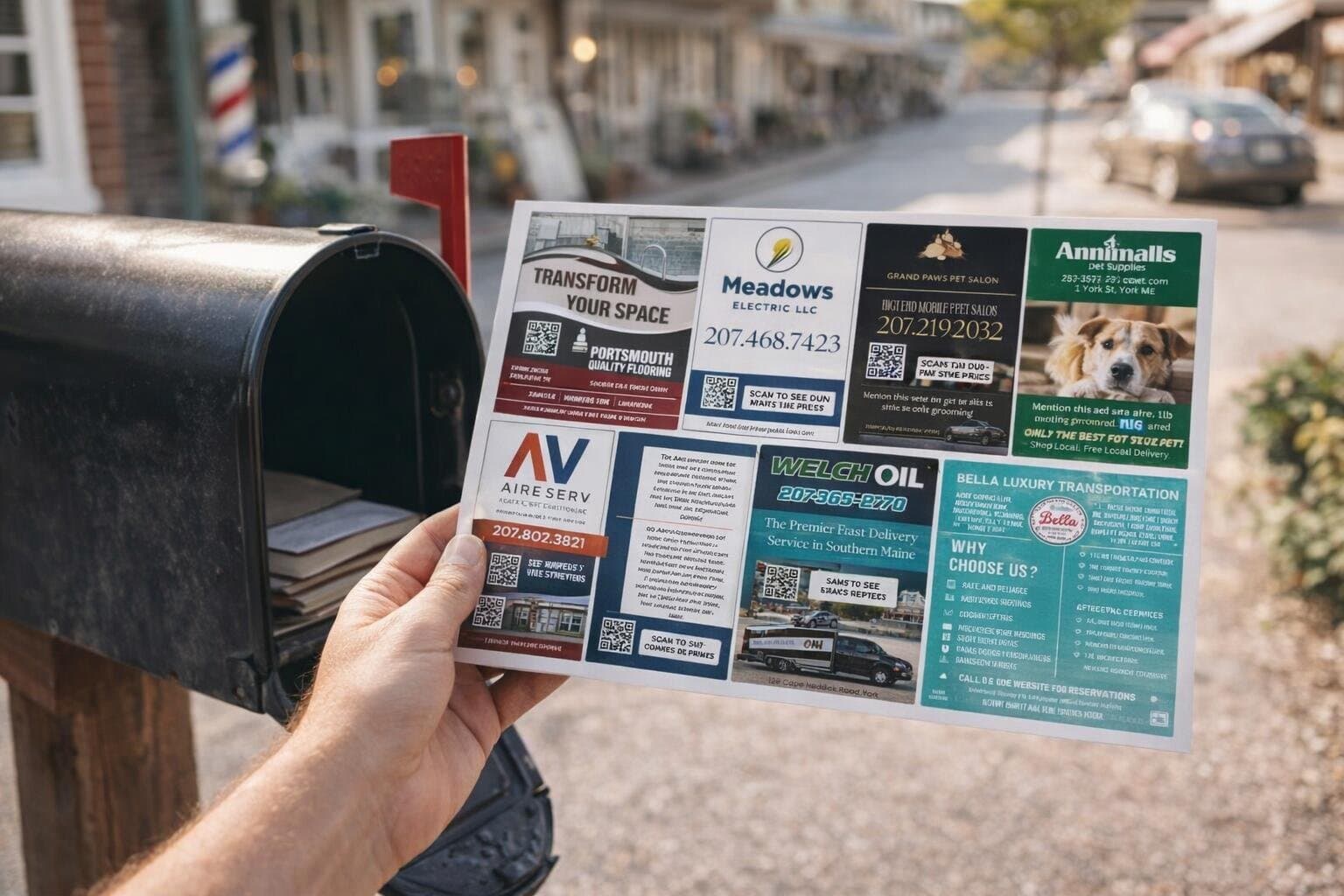
Okay so here's how I'd run Messenger to sell slots on a 9x12 or a community card, built around the limit instead of fighting it.
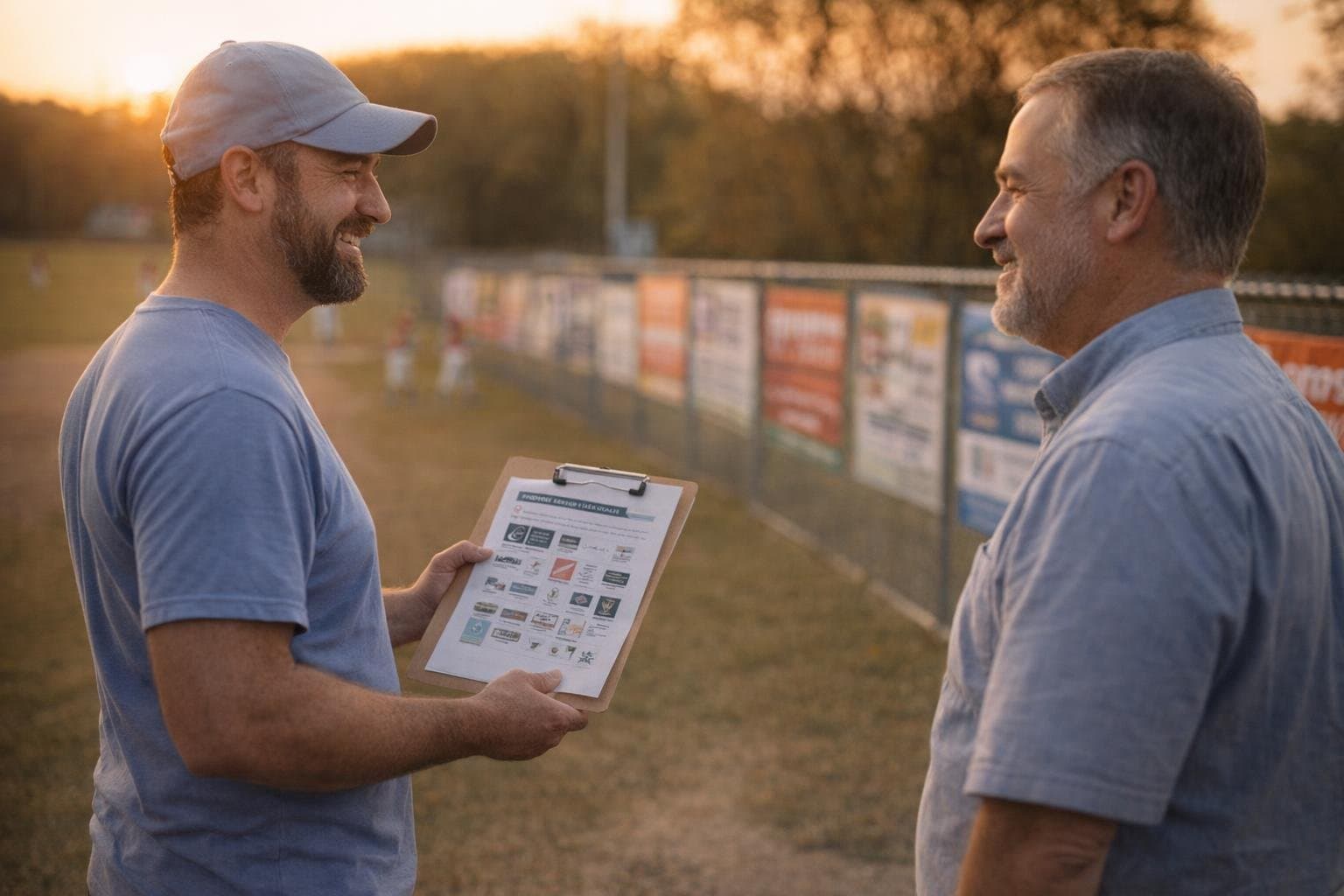
Make them message you first. Post in local Facebook groups and ask people to comment. A conversation someone started is the opposite of an unwelcome message. My guide to Facebook group posts has the exact posts members use.
Mine the recommendation threads. Edward posted on his town page asking who neighbors recommend, got 100+ business suggestions in 24 hours, and messaged each one. The member from the group call goes into the comments where people ask for referrals and messages everyone who got recommended: "Hey, I see a bunch of recommendations for you, right? Like it looks like you're one of the top in the city. Can I send you more information?" In his words, it "hits them with their pride."
Customize the first two lines. Business name, what you saw, why them. The rest can be your template.
Ask a question they'll answer before you pitch. More on that below.
Send in small batches with breaks in between. Morning batch, wait a couple hours, another batch. Never one giant session.
Follow up once, politely, then move channels. If they don't answer on Messenger, email or call. Don't send five messages into a dead thread.
And use your personal profile, not a business page. Tammy tested group posts both ways: 6 comments from her business page, 46 from her personal profile. I told her to use the personal profile, and said the same goes for Messenger. People respond to a human.
The first message has one job: get a reply. Not sell. Get a reply. Once they reply, you're not a stranger messaging out of nowhere anymore. You're in a conversation.
This is the script JP used for those 150 contacts. Four beats:
"Hey I have a question. Is this the right place to reach out to?"
"Do you service my town?"
"Awesome, the reason I ask is... want to be on this flyer?"
Then wait for a yes or no. Shut up and let them answer.
When they started asking buying questions, he used this nudge: "You could do a large ad and take up the space, but MOST businesses I've talked to want the medium sized ad."
Edward, verbatim: "Hey ___, sorry to bug you. I'm mailing out a jumbo postcard to about 10,000 doors in Gilbert featuring local businesses. I'm looking for just one ___ company. Would that be something you might want to be on?"
That 10,000 was his mailing, by the way. Use your real home count (5,000 on a 9x12, 2,500 on a community card). He said almost everyone answered with some version of "You're not bugging me. Tell me more." One of his first 6 to 8 closed.
Rick rewrote his message four or five times. Where he landed: a short note, a picture of the sample card, and a map of the routes it's going to. That last part makes the card real, especially when you're not local.
My honest opinion, the same thing I told Rick: no. "You want to elicit a response. You want to get them emotionally connected just a little bit more first." Explain what it is, then ask "Is this something you'd be interested in being on?" They'll ask the price next, but now they've replied.
For a 9x12, that price is $500 for a slot on a card going to 5,000 homes. On a community card it's usually $250 for 2,500 homes, which is more of an impulse buy, so some members do put it up front. I still lean against it.
If you're already blocked, here's the honest playbook.
First, stop sending. Remember, Meta says pushing past a warning can cost you messaging entirely. Don't try to sneak around it with a second account. That's how a warning turns into something worse.
Check your Account Status. If it's a full suspension, not just a messaging block, Meta's suspended account help page says you'll see a notice when you log in and that you can appeal within 180 days. Rick appealed and got his account back.
Switch channels while you wait. This is where people lose a week for no reason. Sharina sold out a card and her rule was: "If emails aren't working, try FB groups. If FB groups aren't working, switch to DMs. If DMs don't work, switch to texting." Works in reverse too. A Messenger block is a great day to pick up the phone. My cold calling guide has the openers.
Sharina also had a sneaky trick for this. Search the word "text" inside local Facebook groups. It pulls up every business that posted a number to text.
Don't lose your leads. Here's the scary part of living in Messenger: your whole pipeline lives in a chat app you can get locked out of. Joey, who runs his cards around a day job, does most of his outreach on Messenger. If a business isn't on Facebook or Instagram, he emails, and if two emails go unanswered, he calls. On his interview he said, "I still use the 9x12 CRM," even if his brain forgets to update it sometimes. That's the right instinct. Put every conversation in the free 9x12 Method CRM with a status and a follow-up date. If Facebook locks you out for a while, you still know exactly who said "send me the details" and can reach them by email or phone.
Honestly? Nobody outside Meta knows, and I'm not going to pretend.
Here's what we have. Rick never hit a limit, and his guesses were that his account is really old and that he'd paid for Meta Verified. He said himself, "I don't know if that affects it." On our call, I said everybody needs to experiment with it, try it for a month, and see how many messages you can send. That's still my take: it's an experiment, not a fix.
Here's what Meta itself says Meta Verified includes: a verified badge, protection against people impersonating you, and account support (Meta notes some support features may not be available to every subscriber). Higher message limits are not on that list. And remember, Rick wasn't messaging that many people. So it could just be his pace.
If you try it, the support piece might help when something does go wrong. Just don't buy it expecting a free pass to blast 300 messages.
Full transparency, I do teach the full Messenger and Facebook group playbook inside the 9x12 Method community, including the posts and scripts members are using right now. You don't need it to do any of this. Everything above works on its own.
Meta doesn't publish a daily number. Its help page says Messenger limits how many messages you send and how quickly, and may limit some people to 5 chats based on location and violation history. Any specific daily number you see online is a guess, not a Meta rule.
Meta doesn't give a fixed length. Its help page says the length of a block depends on how serious the violation was and your history on Facebook. Stop sending, wait it out, and switch to email, phone, or texting in the meantime. A full account suspension is different, and you can appeal it, generally within 180 days.
You usually can, but those messages land in the person's message requests instead of their main inbox, and Meta lists messages marked as unwelcome as a reason for blocks. Meta's own advice is to message only people you already know. That's why the best approach is getting business owners to comment on a group post first, then messaging them.
Your personal profile. Tammy got 46 comments on group posts from her personal profile versus 6 from her business page, and I recommend the same thing for Messenger. Business owners respond to a person.
No. Meta's spam policy covers activity at very high frequencies whether it's done manually or automatically. Rick used AI software to scrape groups and send messages and got warnings, so he stopped. Send by hand, in small batches.
Yes, it's been done. Rick sold out a community card through Facebook groups and Messenger, and JP sold 3 slots in 24 hours from 150 Messenger contacts. Most members still mix in email and phone, which also protects you if Facebook ever blocks you.
Messenger is a gift if you treat people like people. Let them come to you, and keep your leads somewhere Facebook can't lock. As always, I'm rooting for you.
Ready to run your own card?
Get the course, scripts, tools, and weekly coaching inside the 9x12 Method community.

 Mitchell Tebo