How to text businesses for sales without getting burned: the FCC rules in plain English, where to find textable numbers, and the scripts that sold out a card.
Sharina sold out a whole postcard without making a single cold call or closing one sale over email. Facebook groups and text messages. That's it. So if you're wondering whether texting actually works, it does. This is how to text businesses for sales the way she and other members do it. But I'm also going to be straight with you about the rules, because texting is the one channel where getting sloppy can actually cost you money. Full transparency: I tried texting early on and backed off when I realized it can be a little risky. So this guide gives you both sides. The method, and the guardrails.
Sold out by text + FB groups
Sharina's first card
3 days later
Boat rental reply
About an hour
Fernando's payment
10 minutes
Michael's empty spot filled
Watch: Making Thousands in a Month Just by Texting! - Live Group Call · Summary and transcript
Here's the thing about small, owner-run businesses. The owner is on a roof, under a sink, or in a kitchen all day. They don't sit in their inbox. They don't answer unknown calls. But they look at their phone between jobs. Every single time.
One member on our live call about texting put it simply: it's "a good way to sneak in a little communication that they're going to see." He texted a boat rental company. Nothing. Then three days later, at 9:30 at night, they texted back saying they wanted to go ahead. They were just deciding between a large ad and a standard one. He was sitting on the couch watching basketball.
The same member worked a whole deal by text. The business wanted a second ad thrown in free. He said no. They went back and forth, no phone calls at all, they agreed, he sent an invoice, and two days later the money hit his Stripe account. Cold hard cash, baby.
And texting is fast at the end of a sale too:
Fernando got a guy on a follow-up call while he was live streaming: "I text him a payment link and he paid about an hour later."
Michael filled a last-minute hole on his card in 10 minutes, and the ad got approved by text that same night.
So texting isn't just an opener. It's how a lot of deals actually get finished.
If emails aren't working, try FB groups. If FB groups aren't working, switch to DMs. If DMs don't work, switch to texting. Keep trying until something DOES work. (Sharina)
Okay, let me slow down here, because every "texting for sales" page I read while researching this was written by a company selling a texting app. They either skip the law completely or say "cold texting is illegal" and leave it there. Neither helps you.
Here's the thing. I'm not a lawyer and this isn't legal advice. What I can do is show you what the actual federal rule says, in the FCC's own words, so you know where the lines are. The rule is 47 CFR 64.1200, and three parts of it matter for you.
The rule bans calls to cell phones made with an "automatic telephone dialing system" or a prerecorded voice unless the person gave prior express consent. The FCC defines an autodialer as equipment that can store or produce phone numbers "using a random or sequential number generator" and dial them. The Supreme Court read it the same narrow way in Facebook v. Duguid (decided April 1, 2021).
What that means for us: you typing one number from a yard sign into your own phone and writing a real message is a very different thing from loading 2,000 numbers into a mass-text app. I don't do blasts, I don't do ringless voicemail drops, and I don't want you doing them either. One person, one message, written by you.
The National Do Not Call rules protect "residential telephone subscribers." The FTC's Do Not Call FAQ says it plainly: "The Registry is for personal phone numbers. Business phone numbers and fax lines are not covered."
Sounds like a green light, right? Not so fast. The FCC rule also says the Do Not Call rules apply to "telephone solicitations or telemarketing calls or text messages to wireless telephone numbers." And a lot of the one-person shops we sell to run the whole business off their personal cell. That number on the side of the truck might also be the number their mom texts.
So here's how I'd think about it: treat every cell number like it could be somebody's personal phone. The rule's definition of a telephone solicitation leaves out a message to someone who gave you "prior express invitation or permission" or someone you have an "established business relationship" with. That's why the cleanest texts are the ones where the business already talked to you first.
Yes, partly. The autodialer and prerecorded rule covers calls to any cell number, business or personal. It's the Do Not Call Registry that's limited to personal numbers. So "it's a business number" doesn't get you out of Rule 1. Writing each text yourself does.
And one more thing people ask: you don't need a texting app or any carrier registration to send a text by hand from your own phone. Those registration programs are for business texting platforms. Which is one more reason not to use one for this.
The rule bars telephone solicitations to residential subscribers before 8 a.m. or after 9 p.m., their local time. Easy fix. Text during business hours only.
When someone replies STOP, or anything that means "quit texting me," you're done with that number. Don't argue, don't send "are you sure?" Just stop, and note it in your contacts so you never text them again. Does that make sense? It's the easiest rule here, and the one that keeps you from looking like a spammer.
If you sell in Texas, read this twice. Texas SB 140 changed the state's definition of "telephone solicitation" to include "a transmission of a text or graphic message," and made violations a deceptive trade practice. It took effect September 1, 2025. Other states have their own telemarketing laws too, so check yours (and any exemptions) before you lean on texting as a main channel. Again, not legal advice.
Now the fun part. The best numbers to text are ones the business itself put out there with the word "text" on it. That's not legal permission to pitch them (I call it a gray area), but it's the warmest cold number you'll find.
Sharina shared this trick, and it's gold. Go into your town's community Facebook groups (the resident groups, not the business-owner groups) and type "text" into the group's search bar. It pulls up every post where a local business said "call or text us." A new member on one of our group trainings did the same thing searching "call or text."
My take from that call: most of the time that's a smaller business where it's the owner who answers. Those are exactly the people who buy slots. I break down the posting side of this in my guide on how to sell postcard ads in Facebook groups.
Corey took his dog Murray on a walk around a big community park and passed four yard signs: a roofer, junk removal, a handyman, and a power washer. He snapped a picture of each one. Then he texted each business, told them what he's doing, included the photo, and said where he saw it.
Here's why that's smart. Those businesses are already paying for advertising. You're not convincing them to market. You're offering them a better spot.
Another member does a version of this with work vehicles. He'll email a photo of their truck saying he just drove by, or text someone he's literally driving next to: "Hey, I'm right next to you." His words: "it makes it like I'm a real person." That's the whole game with texting. Real person, real town, real reason.
A member on our texting call checks numbers by typing them into Messages on his Mac. If it turns blue, he knows it's textable. That works, but only halfway. Per Apple's own support page, blue means iMessage (another Apple device). Green means SMS, MMS, or RCS through the carrier, which also gets delivered just fine. So blue confirms it's a cell phone. Green doesn't mean no. If a text bounces back as undeliverable, it's probably a landline. Call it instead.
Hi, is this the owner of [Business]? This is [Your Name], I live here in [Town]. I'm putting together a 9x12 postcard going to 5,000 homes in [Area], one business per category. I saw your sign on [Street] and you'd be perfect for the [industry] spot. Want me to send a picture of what the card looks like? (Reply STOP and I won't text again.)
That last line matters. On another live call I said it straight: "if you're going to do it, definitely include the opt out." It's courteous, and it makes you look like a real business instead of a spammer.
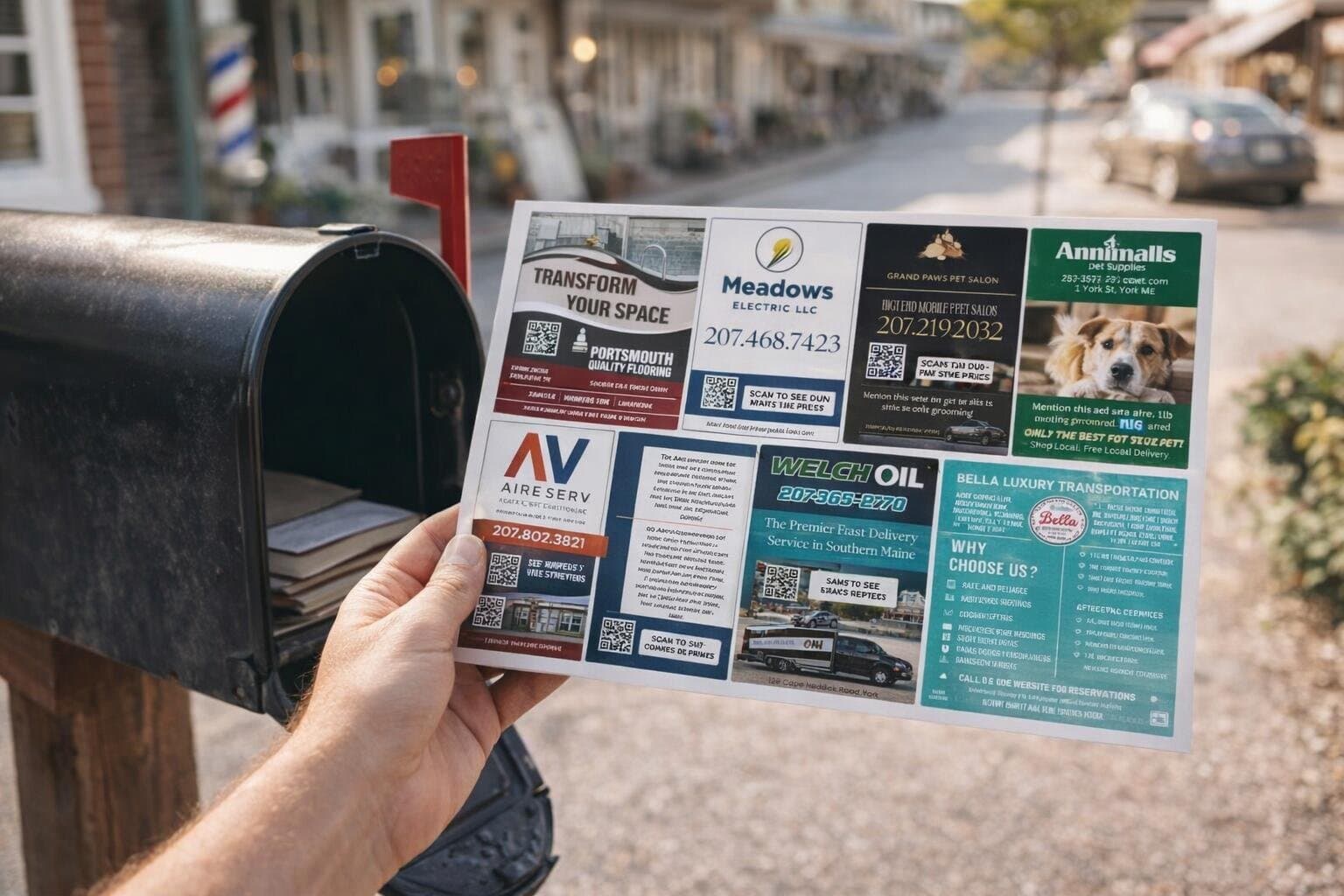
Here you go! [photo of a past card or mockup]. Spots are $500 and that covers your ad going to 5,000 homes. I only take one [industry] business. Want me to hold the [industry] spot for you? It's first come, first served.
Notice you don't send the price until they've seen the card. A picture does more selling than a paragraph.
Hey [Name], just floating this back up. Still have the [industry] spot open on the [Area] card. It goes to print on [date]. Want it?
If they don't answer that, switch channels. Call, drop by, or email. My follow-up system lays out the whole 30-day sequence across channels, and texting fits right into it. Don't keep firing texts at someone who's silent. Two unanswered texts is plenty.
Let me break it down into a simple daily routine. This is how I'd run texting if I were starting a card tomorrow.
Pick the open categories on your card (roofer, HVAC, landscaper, restaurant, whatever's left).
Spend 20 minutes searching "text" and "call or text" in your town's community Facebook groups, plus any yard signs or trucks you passed. Save each one in your CRM.
Send each one a personal first text and mention where you found them.
Reply fast when they answer, with the card picture before the price. One follow-up if they go quiet, then call or email.
When they say yes, text the payment link and collect their ad info.
The business posted this number publicly (sign, truck, group post, website)
You're typing it yourself, one at a time, from your own phone
It's business hours where they are
The text says who you are, that you're local, and where you found them
There's a "reply STOP" line
You saved the contact with the business name and industry
Nobody on this number has ever told you to stop
The member from our texting call said he texts through the day "to see if I can catch them when they're not doing what they do." That's the mindset. Little bursts between jobs, theirs and yours.
Texting isn't better than everything else. It's another tool. Here's how I see the trade-offs:
Cold email is the safest place to start and easy to do in volume. My cold email templates are the ones members use. The downside is slow replies.
Cold calling gets you a yes or no right now, and you can hear what's holding them back. Read my cold calling guide if that's you.
Facebook Messenger works well for businesses with a page, but Facebook throttles you if you go too fast. Here's what Meta actually says about the Messenger message limit.
Texting is the most direct line to an owner's pocket, which is exactly why you have to respect it.
My favorite combo is the warm-up. One member said a Facebook message or a text "gives me permission to call." Same idea as emailing first so you have a reason to call and ask if they saw it. A short text that says "I'm going to give you a quick call this afternoon about the [Area] postcard" makes the call feel expected instead of random.
Honestly, the members who sell out fastest don't pick one channel and pray. They do what Sharina said: if one stalls, switch. Full transparency, I teach all of these channels with real scripts inside the 9x12 Method community, but you don't need to join to start texting today. Everything above is enough to get your first reply.
Objections come in by text too, and you've got time to think before you answer, which is nice. A concrete business owner told one of our members over text that he wasn't sure, because he might just get small jobs. The member's answer: "How many jobs do you need to make up for a $249?" Look, that's just math.
Keep your replies short. Answer the real worry. Ask one question back. For the most common ones (too expensive, does mail even work, I need to think about it), use my list of postcard sales objections and shrink the answer down to two sentences for text.
It depends on how you send it, who owns the phone, and your state. The federal rule restricts autodialed or prerecorded messages to cell phones without consent, and applies the Do Not Call rules to texts sent to wireless numbers. The FTC says business numbers aren't covered by the Do Not Call Registry, but many small business owners use a personal cell. Talk to a lawyer if texting will be a big part of your business. This isn't legal advice.
Yes. The FCC's rule (47 CFR 64.1200(e)) says the Do Not Call rules apply to telephone solicitations or text messages sent to wireless numbers. The Registry itself is for personal numbers, which is why it matters whether that business cell is also somebody's personal phone.
The federal rule bars telephone solicitations to residential subscribers before 8 a.m. or after 9 p.m., their local time. For businesses, just text during normal business hours. That's when owners are deciding things, and it keeps you well inside the line.
Look for the word "text" where they posted it, like "call or text" in a Facebook group post or on a sign. On an iPhone or Mac, a blue bubble means the number uses iMessage, but a green bubble (SMS, MMS, or RCS) also gets delivered. If your text comes back undeliverable, it's likely a landline, so call it instead.
Two unanswered texts is plenty. Send the first one, then one short follow-up a couple of days later. If they still don't answer, switch to a call, an email, or a visit. Firing more texts at a silent number is how you get reported as spam.
No. Prerecorded messages need consent, a mass-text tool can cross into autodialer territory, and both make you look like spam. You also don't need any app to text by hand from your own phone. Text one owner at a time, by hand, and use email or calls when you need more volume.
Texting isn't magic and it isn't something to abuse. But a real person, sending a real message, to a business that already said "call or text," sells slots. Go send your first five today. As always, I'm rooting for you.
Ready to run your own card?
Get the course, scripts, tools, and weekly coaching inside the 9x12 Method community.

 Mitchell Tebo