Recession proof business ideas checked against real BLS job data from 2008 and 2020, a 4-question test for any idea, and one business customers pay for up front.
Every time the news starts saying "recession" again, the same lists pop up. Health care. Repair. Cleaning. Bookkeeping. Nobody checks them against what actually happened the last two times the economy fell apart. So I did. If you're looking for recession proof business ideas, here's the honest version: the government's own job numbers from 2008 and 2020, a simple test you can run on any idea, and the one business I know where the customer pays you before you spend a dime.
Full transparency, I run a postcard advertising business and teach it, so I'll tell you exactly where it fits and where it gets harder when people are scared. But most of this post is about any business, not mine.
Here's the thing. "Recession proof" is a sales phrase. There's no business that's immune when people stop spending. What you actually want is a business that bends instead of breaks.
The National Bureau of Economic Research, the group that officially dates U.S. recessions, defines one as "a significant decline in economic activity that is spread across the economy" that "lasts more than a few months." Spread across the economy. So yes, everybody feels it. What the lists skip is that a recession doesn't hit every industry the same way, and it doesn't hit the same industries every time.
Here's how big the last two were:
10.0% (Oct 2009)
Peak unemployment after 2008
20.5 million
Jobs lost in April 2020 alone
14.7%
Unemployment in April 2020
2 months
Length of the 2020 recession
Now look at who actually got hit.
Industry
Dec 2007 to Dec 2009
April 2020 alone
Construction
Lost 1.6 million jobs
Lost 975,000 jobs
Manufacturing
Lost 2.1 million jobs
Lost 1.3 million jobs
Health care
Added 631,000 jobs
Lost 1.4 million jobs
The 2008 numbers are from the BLS jobs report for December 2009, counting from when the recession began. The 2020 numbers are from the BLS report for April 2020, one single month. That same April, leisure and hospitality lost 7.7 million jobs, 47 percent of the industry. The 2020 recession ran February to April 2020, per the NBER.
Read that health care row again. In 2008, health care was the hero. It added jobs right through the recession. Then in April 2020, health care lost 1.4 million jobs in one month, and offices of dentists alone lost 503,000. Every list that says "health care is recession proof" is only looking at 2008. Does that make sense?
Every recession picks a different victim. So don't bet on an industry. Bet on how the business is built.
And construction and manufacturing got hit both times. In 2008 the BLS says construction and manufacturing had their biggest percentage drops since World War II. In April 2020, 691,000 of the construction jobs lost were specialty trade contractors. That's your electricians, plumbers, and roofers. So "just learn a trade" is half true, and I'll get to which half in a second.
Instead of trusting somebody's list, run your idea through these four questions. A business that passes all four is about as close to recession resistant as it gets.
A burst pipe is a need. A new kitchen is a want. Both are "home services," but only one gets bought when money is tight. This is the half of the trades story that's true. Emergency repair holds up. Remodels, upgrades, and new builds get pushed to "next year."
So when you look at an idea, ask what the customer does if they skip it. If the answer is "nothing bad happens," that's a want.
If you have to buy inventory, equipment, or ads before anybody pays you, a slow month eats your savings. If the customer pays after the work, you only risk your time. If the customer pays before you spend anything, you're in the best spot of all. I went deep on this in my list of low cost business ideas sorted by who pays first, so I won't repeat it all here.
This is the one that actually kills businesses in a downturn. Rent. Equipment loans. A truck payment. Payroll. Software you signed a contract for. Sales drop, but those bills don't.
Write down every bill you'd still owe in a month where you made zero dollars. If that number is big, the business is fragile, no matter how "essential" it sounds.
One big client is great until they cut you. Twenty small customers who each pay a little is a lot harder to wipe out. Same with location. If the business only works with people in a room together, April 2020 showed what happens to it. Restaurants and bars lost 5.5 million jobs that month alone, per the same BLS report.
Okay so, you guys, here are the categories that pass most of the test. I'm not going to give you made-up startup costs or "average income" numbers, because nobody has real ones for these. I'll tell you why each one holds up and the catch.
Fixing things passes the "need" question better than almost anything. A furnace that dies in January gets fixed, money or no money. Same with water on the floor or a car that won't start. The catch is the skill. If you're thinking about getting into the trade jobs side of this, know that an apprenticeship takes years, and the new-construction side of the trades took real hits in both recessions.
Cleaning, junk hauling, pressure washing, lawn care. These are the boring businesses I love because nobody brags about them, so fewer people start them. The catch: the gear-heavy ones (lawn care, pressure washing) fail question 3 if you finance the equipment.
Bookkeeping and tax prep are about as steady as it gets, because the IRS doesn't take a year off. The catch is trust. Small businesses don't hand their books to a stranger, so it takes time to land the first few clients.
People don't stop feeding the dog. But dog walking, grooming, and boarding are extras, and extras get cut. If you go this route, lean toward the services a busy owner can't easily do themselves, like daily walks while they're at work.
Used stuff is the budget option, so it fits a tight-money year. But reselling fails question 2 hard. You buy stock first and hope it sells. Keep it small until you know your turnover.
If you're asking about recession proof side hustles, you're probably not trying to replace your income tomorrow. You're trying to make sure you're not at zero if your job goes away.
I made a whole video about this, and here's what I said in it: "You don't need to quit your job tomorrow. You don't need to blow up your life. You don't need to risk it all. In fact, you should not quit your job right away at first. You just need a bridge."
That's what a side hustle is in a downturn. A bridge. And a good bridge has three things:
It fits around a full-time schedule. Early mornings, lunch breaks, evenings. If it needs you during work hours, it's not a side hustle. I wrote a whole guide on side hustles that work when you keep your full-time job.
It costs close to nothing to start. You don't want to spend your emergency fund on the thing that's supposed to protect you.
It can grow if you need it to. If the layoff comes, you want something you can pour 40 hours into, not something capped at a few hundred bucks a month.
Honestly, most "recession proof side hustles" on the big lists fail that third point. With delivery apps and survey sites, the only way to make more is to give them more hours.
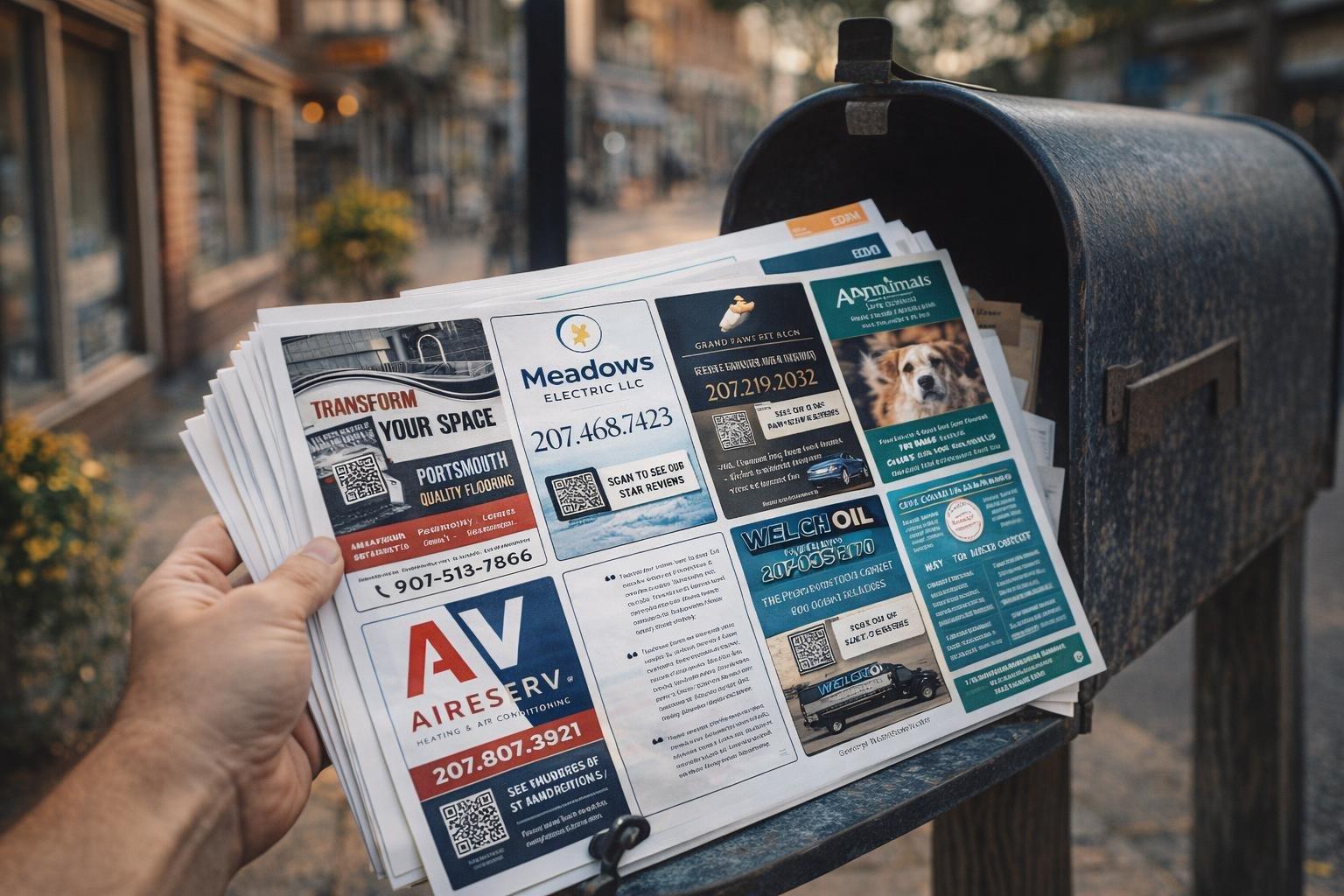
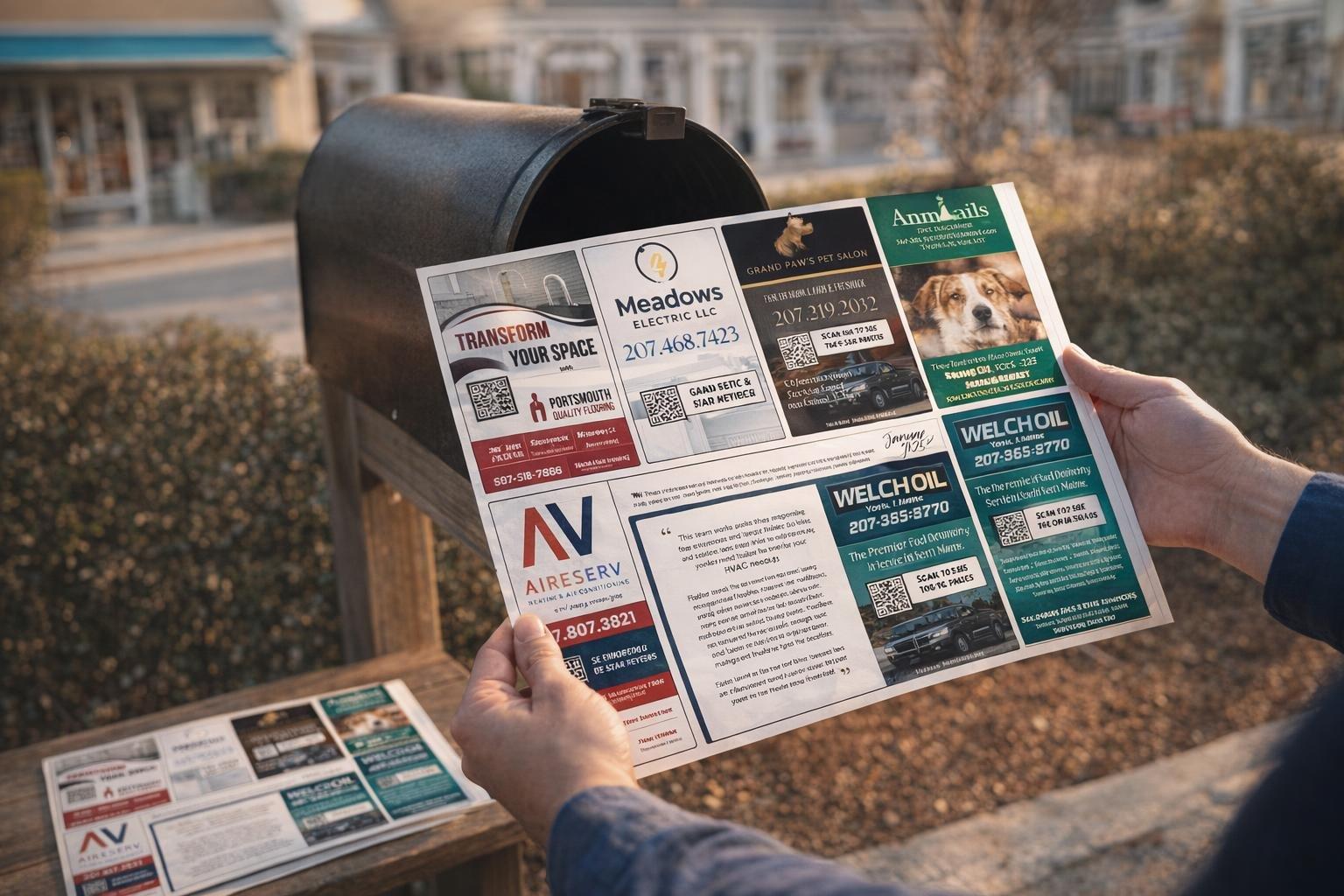
Here's my world. A 9x12 postcard business means you sell ad spots to local businesses on one big shared postcard, then mail it to every home on a set of routes using USPS Every Door Direct Mail. You collect payment from every advertiser before anything gets printed.
Run it through the test:
Need or want? For the business owner, getting new customers is a need. In a slow economy they need customers more, not less.
Who pays first? The advertisers. Before you print a single card.
What do you owe when sales stop? Nothing. No lease, no inventory, no equipment loan. If you don't sell a card one month, you don't print one.
How many customers? About 16 advertisers per card. Lose one, and you sell the spot to the next business on your list.
Here's the math with our real print prices:
Metric
Value
Spots per 9x12 card
About 16
Price per spot
$500
Revenue per card
$8,000
Print, postage, and mailing (All Inclusive, 5,000 homes)
$2,999
Profit per card
$5,001
Money you need up front
$0
That $2,999 is the All Inclusive price at 9x12 Method Printing: printing, postage, and delivery to the Post Office for 5,000 homes. You only pay it after the spots are sold. If you want the step-by-step on that, here's how to start with no money.
I'm not going to pretend this part is easy. When the news is bad, business owners hesitate. One of our members said it perfectly on a group call. She was walking strip malls and said, "Everybody is super interested. It's just nobody's willing to pull the trigger right now because they're scared to death of the economy."
Her answer was smart. She told owners the card takes three or four months to really build up their name, and by then whatever they're scared of right now will be behind them. Scary headlines come and go. The business still needs customers on the other side.
Here's the script I give people for that exact moment, word for word:
"Well mr/ms business person sounds like a great time to utilize a tried and true marketing strategy while consumers are still WILLING to spend, before it's too late. If all of this uncertainty is true, surely you don't want to be sitting in an empty store 3 months down the line regretting not focusing on STICKY marketing efforts like this 9x12 to build a customer base that will last through tough times."
More on handling these in my full list of postcard sales objections.
When $500 really is too much for an owner right now, don't slash your price. My rule: "I encourage you not to discount your prices unless you're really getting desperate." Instead, offer the community card. It's a 6x11 card that goes to 2,500 homes, with spots at $250. Sixteen spots is $4,000, the All Inclusive print run is $1,449, and you keep $2,551.
I call that price point "yes money." It's money an owner can part with without losing sleep, and like I said in one of my videos, "Especially in this economy where every penny counts, that's important." And a lot of them buy the spot as defense, so their competitor doesn't get it.
Lucy, one of our members, ended up on her local ABC news station during the pandemic. A reporter saw her Facebook posts and ran it as a David vs Goliath small-business story. On her first community card, her Amish butcher got six phone calls the day the cards landed and sold a half beef ($1,600), a half hog, and 100 pounds of ground beef.
And it's not just people who've done sales before. Travis builds vehicles in a factory. Zero sales background. He walked into 10 local businesses cold and sold 8 spots in one day. It's a numbers game.
Full transparency. I teach all of this inside the community, but you don't need it to get started. Everything above is enough to try it.
The worst time to start is the week after a layoff, when you're panicking. The best time is now, while the paycheck still hits. Here's the order I'd do it in:
Run each idea you're considering through the 4 questions. Cross off anything with a big monthly bill.
Pick the one that passes the most, and that you can work on before or after your job.
Talk to 20 potential customers this week. Not friends. Real buyers. Their answers tell you more than any list.
Get your first paying customer before you buy anything you don't need. Track every lead and follow-up in a free CRM so nobody slips through.
Put the first profits in savings, not in a lifestyle upgrade. That cash is your real recession protection.
No. A recession, by definition, is a drop in activity spread across the economy. What you can build is a business that holds up: something people need, with customers who pay before or right after the work, almost no monthly bills, and lots of small customers instead of one big one.
It changes every time. From December 2007 to December 2009, construction lost 1.6 million jobs and manufacturing lost 2.1 million. In April 2020, leisure and hospitality lost 7.7 million jobs in a single month, mostly restaurants and bars. Construction and manufacturing took a hit both times.
Not anymore, if it ever was. Health care added 631,000 jobs during the 2007 to 2009 recession, but it lost 1.4 million jobs in April 2020 alone, led by offices of dentists (503,000), per BLS. When people can't or won't come in, health care gets hit too.
No. Your paycheck is your safety net. Build the business on the side, get it paying, and keep your job until the side income can really replace it. Starting while you're still employed means you're never deciding out of panic.
The best one fits around your job, costs close to nothing to start, and can grow if you lose your job. I'm biased, but selling ad spots on a shared local postcard checks all three, because advertisers pay you before the card is printed. Whatever you pick, run it through the 4-question test first.
Some pull back, and you'll hear "the economy's scary right now" more often. Others need customers more than ever and keep going. The answer is to show them how the ad builds their name for when things turn around, and to offer a lower price point (like a $250 community card spot) instead of discounting.
Look, nobody can promise you a business that's safe from everything. But you can build one that doesn't need much to survive and gets paid first. That's the whole game. As always, I'm rooting for you.
Ready to run your own card?
Get the course, scripts, tools, and weekly coaching inside the 9x12 Method community.

 Mitchell Tebo