Are trade jobs safe from AI? What Microsoft, Anthropic, and the 2025 to 2035 BLS numbers say about electricians, plumbers, HVAC, and roofers, plus the catch.
Every week somebody in my comments asks a version of the same thing. "Should I quit my desk job and become an electrician before AI takes it?" So let's answer it with real numbers, not vibes. Are trade jobs safe from AI? Mostly, yes. The field work is about as safe as work gets right now. But there's a catch nobody selling trade school wants to say out loud, and there's a part of every trade business that AI is going to change a lot.
Full transparency, I'm not an electrician or a plumber. I run and teach a business that sells advertising to local businesses, and the plumbers, roofers, and HVAC guys in town show up on our cards all the time. So I spend a lot of time around these trades, and I care how this question gets answered.
Watch: Simple $10K/Month Local Side Hustle AI Can’t Touch (Start With $0) · Summary and transcript
Most of the pages ranking for this question are trade schools and training companies. They have a stake in the answer, and a lot of their numbers have no source at all. So here's what three actual research teams found.
Microsoft Research measured real AI use. In a paper called "Working with AI," Microsoft researchers took about 200,000 anonymized U.S. Bing Copilot conversations from January to September 2024 and scored every occupation group on how much its work overlaps with what people actually use AI for. Higher score, more overlap.
0.38
Media and communication workers
0.35
Sales reps (services)
0.07
Construction trades workers
0.04
Grounds maintenance workers
Look at that gap. The writers and the salespeople score about five times higher than the people swinging hammers.
Goldman Sachs estimated which tasks could be automated. Back in March 2023, as reported by CNBC, Goldman put the share of automatable tasks at 46% for office and admin work and 44% for legal work. For construction and extraction? 6%. Installation, maintenance, and repair? 4%.
Anthropic looked at its own usage data. In March 2026, Anthropic (the company behind Claude) published "Labor market impacts of AI." It found that 30% of workers have zero coverage in their data, meaning their tasks basically never show up in AI conversations. Their examples include cooks and motorcycle mechanics. They also found "no systematic increase in unemployment for highly exposed workers since late 2022," with tentative signs that hiring of 22 to 25 year olds has slowed a bit in the most exposed jobs.
Two honest caveats, because I'm not going to oversell this:
The Microsoft authors say plainly that reading high overlap as job loss "would be a mistake," because what new technology actually does is hard to predict. Low overlap isn't a lifetime guarantee either.
None of these studies measures robots. They measure AI that lives on a screen. That's the kind hitting office work right now.
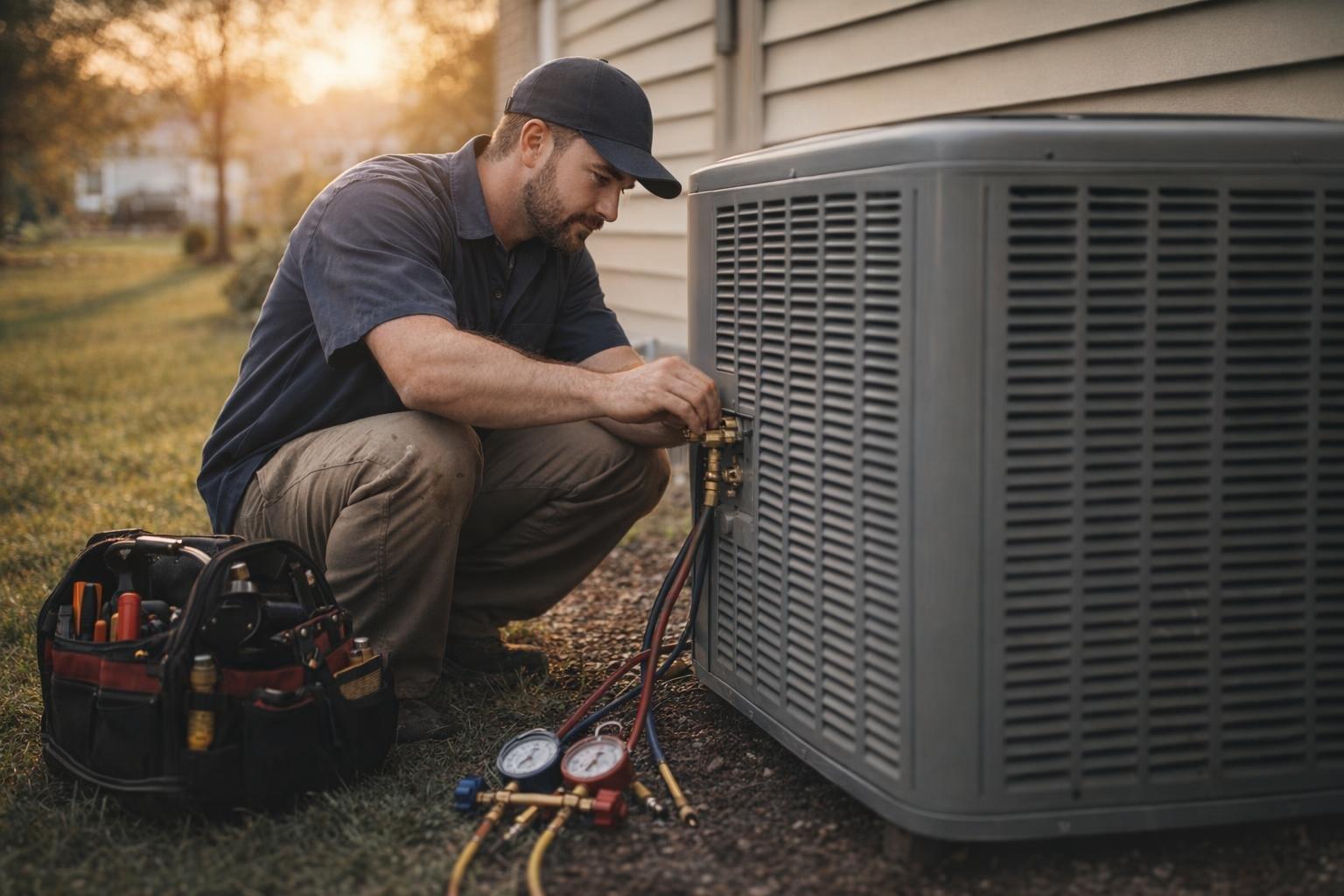
AI is great at anything that lives on a screen. It can't crawl into an attic, sweat a pipe, or climb a roof in August.
So what are the trades AI can't replace? Here are four of the big ones, straight from the Bureau of Labor Statistics. The ranking pages I checked that quote the BLS were still using the old 2024 to 2034 projections. These are the current ones: median pay as of May 2025 and growth projected from 2025 to 2035. For context, the BLS puts average growth for all jobs at 3%.
Here's the thing. Every one of these is growing faster than the average job. And the BLS says many of those openings come from people retiring or leaving the trade, not brand new jobs. Somebody has to replace the guys who are hanging it up.
Honestly, the data doesn't crown a winner between these. They all sit near the bottom of the automation estimates for the same reason: the work happens in a real house, every house is different, and somebody has to physically show up and fix it. Old houses are weird. Crawl spaces are weird. That weirdness is the moat.
If you're picking between them, I'd look at three things instead:
Speed to a paycheck. HVAC has the shortest formal path on the list. Roofing is mostly learned on the job.
Pay. Electricians, plumbers, and HVAC techs sit within about $2,800 of each other at the median. Roofers earn less at the median but can start faster.
The work itself. Roofing in July is a different life than running wire in a finished basement.
Here's the part that most "AI proof trades" articles skip. Go back to that Microsoft table. Inside the same trades, the people who supervise and manage scored higher than the people doing the work:
Metric
Value
Install, maintenance and repair supervisors
0.13
Construction supervisors
0.11
Construction trades workers
0.07
Helpers, construction trades
0.06
That's nearly double. And it makes total sense. The wrench is safe. The desk isn't. The parts of a trade business that live on a screen are exactly where AI shows up:
Writing estimates and proposals
Scheduling and dispatch
Answering the phone and booking jobs
Looking up a weird error code on a furnace
Writing ads, emails, and social posts
So if you're a tech in the field, AI is mostly a tool that saves you some paperwork. If you're the office manager at a plumbing company, your job is going to look different in a few years.
Okay so here's what the trade school ads don't lead with. Safe from AI is not the same thing as easy.
Time. The BLS says most electricians and plumbers learn through a 4 or 5 year apprenticeship, with about 2,000 hours of paid on-the-job training a year plus classroom time. You do get paid while you learn, which is great. But it's years.
Licensing. Most states require electricians and plumbers to be licensed. Plumbers usually need 2 to 5 years of experience plus an exam first. Nearly all HVAC techs need EPA certification to handle refrigerant. Every state is different, so check yours.
Your body. It's physical, it's hot, it's cold, and it adds up over a career.
Seasons. Roofing and a lot of HVAC work rise and fall with the weather.
None of that is a reason not to do it. If you're 19 and you like working with your hands, I think a trade is one of the smartest moves you can make right now. But if you're 38 with two kids and a mortgage, a 5 year apprenticeship is a real ask. And that's where a lot of people get stuck.
Here's what I tell people who want an AI proof income but can't start over in an apprenticeship. You don't have to fix the furnace. You can help the furnace guy get more calls.
Think about it. Every one of those trades businesses needs customers in a specific town. They can't sell to the internet. They need the homes within 20 minutes of their shop. And they love mail. Like I say in the video on this page, "the roofer in town, the realtor in town, they love spending money on mail marketing."
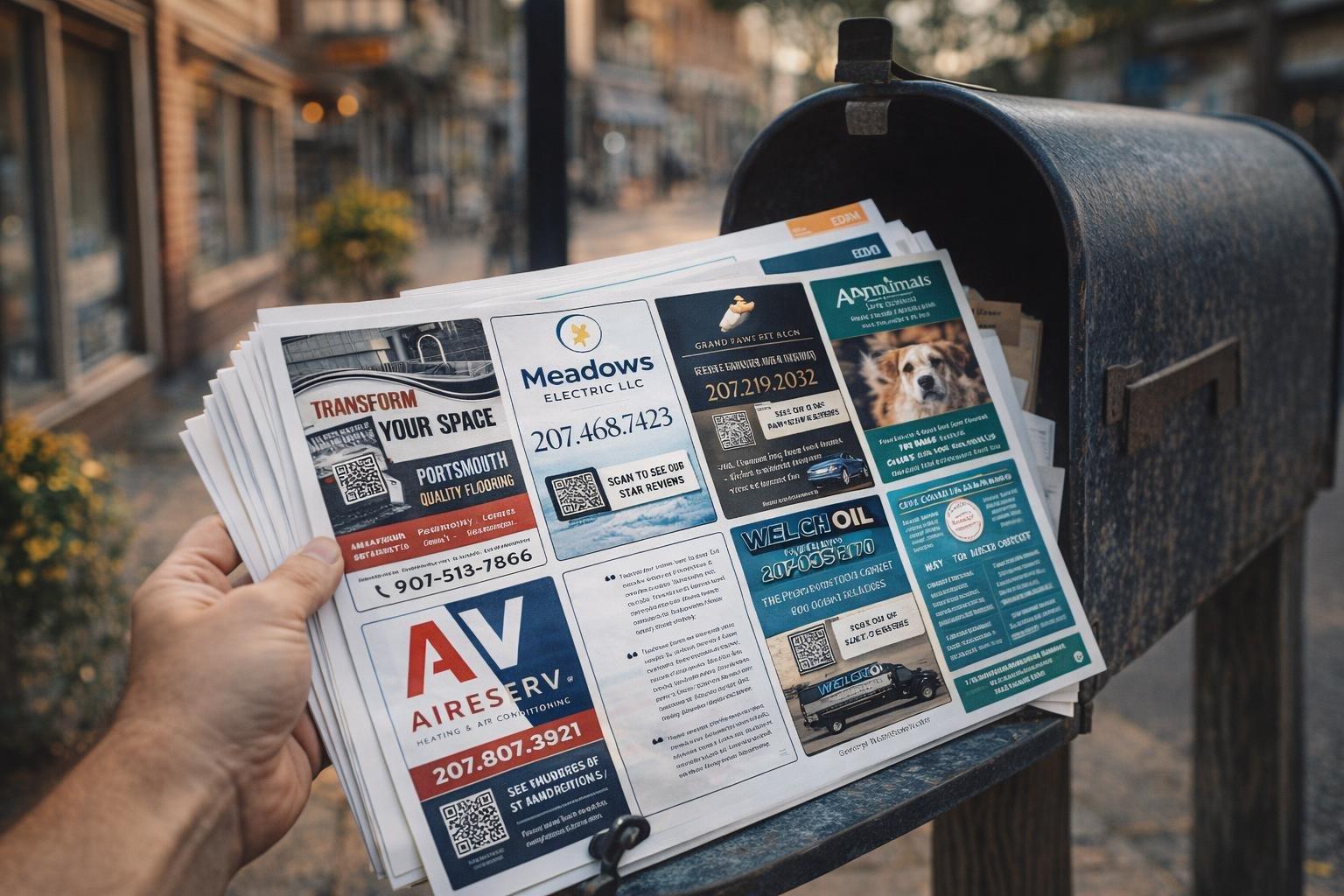
That's my whole business. You sell ad spots on one big 9x12 postcard to local businesses, one per industry, and mail it to every home in a neighborhood. AI can't reach into somebody's mailbox. It can't stick a postcard on somebody's fridge for a month. And the businesses buying the spots are exactly the ones on that BLS table. I wrote a whole post on AI proof business ideas if you want the bigger list, but here's how this one works with trades.
16
Ad spots per card
$500
Price per spot
$8,000
Revenue per card
$2,999
Print and mail to 5,000 homes
$5,001
Profit per card
$0
Upfront cost
The $2,999 is our All Inclusive price through 9x12 Method Printing, and it includes printing, postage, and getting the cards to the Post Office. The businesses pay you before anything prints, so you're never fronting money. If you want something smaller to start, a community card is 16 spots at $250, $1,449 to mail 2,500 homes, and $2,551 profit.
If you want to try it, here's the simple version. I walk through the whole thing in more detail in my post on how to find advertisers, but this gets you moving.
Pick one town where you'd actually mail. Your own is perfect.
List 30 local trades businesses: HVAC companies, plumbers, electricians, roofers, landscapers. Family-owned, not national chains, because corporate makes those marketing calls.
Email or call them with one line: "I'm putting together a big 9x12 postcard going to 5,000 homes in town, and I'm looking for you to be the featured roofer on the card. Want to claim it before I ask somebody else?"
Time it right. Don't call an HVAC company in the middle of a July heat wave. Hit them in the slower shoulder weeks when they're thinking about filling the schedule.
Take payment before you print, fill the rest of the card with other best industries like dentists, restaurants, and realtors, and send it.
Full transparency, I teach all of this inside the community, with the exact scripts and a free CRM to track every call. You don't need it to get started. Everything above is enough to make your first few calls this week.
Look. If you're young and you love working with your hands, go learn a trade. The data says that's a great bet. And if you can't start over right now, you can still build something AI can't touch by helping those same trades businesses grow. It is that simple.
Not anytime soon based on the data we have. Construction trades workers score near the bottom of Microsoft's AI overlap study, and the BLS projects electrician jobs to grow 9% from 2025 to 2035, faster than the 3% average. AI may help with estimates, code lookups, and scheduling, but someone still has to pull the wire and make the connections in a real building.
Same answer. Plumbing happens in real homes with old pipes, odd layouts, and surprises behind the drywall. Goldman Sachs estimated only 6% of construction and extraction tasks (the category plumbers fall under) could be automated, and the BLS projects plumber, pipefitter, and steamfitter jobs to grow 7% from 2025 to 2035.
The field work, no. Goldman Sachs estimated only 4% of installation, maintenance, and repair tasks could be automated, and HVAC mechanics and installers have the fastest projected growth on our list, 11% from 2025 to 2035 per the BLS. What AI is more likely to change is the office side: booking calls, dispatch, and writing estimates.
Of the four in this post, plumbers, pipefitters, and steamfitters had the highest median pay at $63,800 in May 2025, then electricians at $63,190, HVAC techs at $61,010, and roofers at $55,440, per the BLS. None of them needs a college degree, though electricians and plumbers usually need an apprenticeship and a license.
The research doesn't single one out. Construction trades and repair work both land near the bottom of every study I cited above. Pick based on how fast you need a paycheck, how long you're willing to train, and what your body can handle.
If you like hands-on work and can commit to the training, it's one of the better bets out there. If you can't start a multi-year apprenticeship right now, you can still work with the trades by selling local advertising to them, which takes no license and no money up front.
As always, I'm rooting for you. Whether you end up holding a wrench or selling ads to the guys who do, go build something AI can't touch.
Ready to run your own card?
Get the course, scripts, tools, and weekly coaching inside the 9x12 Method community.

 Mitchell Tebo