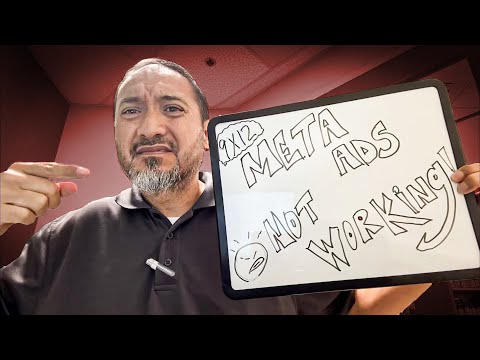
Mitchell explains the ghost product sales tactic, then pairs it with the prescriptive close and the order of importance close to sell postcard ad slots.
Key takeaways
- The ghost product means deliberately steering a prospect away from something they don't need, like a bigger slot, which shows you're on their side.
- Once trust is built, use the prescriptive close: tell them exactly how to use the slot, what offer to run, and what results to expect.
- People want guidance more than options, because options feel like homework while a clear prescription feels like clarity.
- When price is the issue, offer to prioritize in order of importance, then explain what they'd lose without it, like professional ad design.
- Tie the service to an existing habit, such as checking QR scans whenever they review their point of sale numbers on Monday.
Read the full guide
 Sales & Outreach
The Ghost Product Sales Technique: How Removing Money from the Table Closes More Deals
Learn the ghost product sales technique that builds instant trust by taking money off the table. Perfect for 9x12 postcards and any sales process.
7 min readVideo
 Sales & Outreach
7 Postcard Sales Objections and Exactly How to Answer Them
The 7 objections every postcard operator hears and the exact responses that close. Real scripts for price pushback, digital ads, and I tried postcards before.
14 min readVideo
Read the full transcript
Auto-generated from the video, lightly formatted. Expect a few typos.
Today, I want to teach you a sales tactic that is so powerful, it can completely change the way that people trust you during a sale. It's one of those ideas that seems simple on the surface, but once you understand it and use it intentionally, becomes one of the most persuasive sales tools you can deploy. And it works in almost any industry, whether you sell physical products, home services, or something like the 9x12 postcard. Before I explain the tactic, let me walk you through the principle behind it, because that's where the magic actually happens. Most people think sales is about stacking reasons why someone should buy.
more benefits, more features, more hype. The truth is that people don't just trust you faster because they have more reasons to buy. They trust you faster when you give them reasons you aren't trying to take advantage [music] of them. And the simplest, most concrete way to prove that is by taking money off of the table. That's the basics of this tactic.
I call it a ghost product. Some people call it a sacrificial lamb. But the idea is this. In the middle of your offer, you intentionally remove something or you redirect them towards something cheaper elsewhere or you point out something that they don't need altogether. This moment signals that you're on their side.
I'm on your side. you're [music] on mine. And when you do this correctly, their guard drops instantly. They trust you. They listen to you.
And they're far more willing to follow your recommendations afterwards because you're basically saying, "Hey, I don't want your money unless you're actually getting the right product." Let me relate this to the 9x12 method for a second, okay? Because it makes the concept really clear. So the 9x12 method is obviously a business model where you sell small ad spaces to local businesses on this giant postcard. And you make about $5,000 in sales just by selling these ad slots to local [music] businesses.
And that's $5,000 profit to be clear. So, it's super simple, beginner friendly, and easily scalable because you can do it monthly and you can add in new locations every [music] single month. So, if you see me holding up this big postcard, that's what I'm talking about. But this tactic works for any sales [music] position. So, now back to the tactic.
Imagine you're offering a business a slot on your postcard. Maybe they're asking if you offer multiple sizes or [music] they're confused about what they actually need. Instead of pushing everything at them, you look at the situation and you say, "Honestly, I don't think you need the big spot. The small one's perfect for you. the small one's perfect for you based on what you're trying to do.
Or something like, "Oh, you don't need this add-on. Just just stick with this thing right here and you'll be good." So, that's the ghost product. [music] You intentionally cross something out for them. In the moment you do it, the power dynamic completely flips.
You move from a salesperson to an adviser. You're not just pushing products. You're advising them on what they actually need, even though it means you could potentially make less money for it in their [music] eyes. I mean, you're literally telling them, "No, don't don't buy my more expensive product. You don't need that."
But, let's be real, they probably weren't going to buy it anyway. So, now you're [music] building trust. And even if they were going to buy your premium product that you just crossed off, well, they'll probably still do it and now they just trust you more anyway. And here's the second layer of this [music] tactic, which is very important. Once you've removed something and demonstrated that you've acted in their best interest, [music] you immediately shift into what I call the prescriptive close.
You don't just tell them what they're buying. You tell them exactly how they're going to use it, why it matters, and what it's going to do for them. So, for example, if I'm explaining a postcard slot to somebody, let me make sure I'm not holding this upside down. I'm not just saying this postcard goes to 5,000 households. [music] Instead, I'm saying this goes to 5,000 households and here's what's going to happen when your offer lands in that many homes.
If you include a great offer, you'll get a burst of new customers. If you're consistent, you'll gain top of- mind awareness in the neighborhood. You'll be the plumber that everybody thinks of when they think, "Oh, I got a water leak." And here's the type of offer that I recommend because it performs [music] the best for your industry. So, now that you've talked to them about that, you've moved into coaching prescribing.
You're prescribing them a plan. And people [music] love and pay for prescriptions. This works because people want guidance more than they want options. Options feel like homework. Prescription feel like clarity.
So when you combine the ghost product with the prescriptive clothes, you get [music] this beautiful one-two punch. First they trust you. Then because they trust you, they accept your guidance. And because they accept your guidance, they buy. You make money.
So it's one of the simplest and most natural ways to get somebody to say yes without pressure and without gimmicks. Just genuine transparency paired with clear direction. Now, let me add another element that helps you transition smoothly [music] into the clothes, specifically when somebody hesitates on price. This is where you use what I call the order of importance clothes. So, let's imagine you're trying to sell them onto the 9x12 postcard, but you also mentioned that you have a smaller community card option, which is essentially just a cheaper, less premium product.
If they say something to you like, "The 9x12 card might be too much for me right now." You simply respond, "No problem. Do you want me to prioritize these in order of importance?" So, then you remove the most essential part. And in this case, you would remove ad design because community cards typically come with less custom ad design.
And you'll see why this is important. You don't downgrade it like it doesn't matter. You simply explain what would be missing without it, without the professional ad design. So when people see what they lose, they often put it back in. So it's a clean and respectful way to handle objections without feeling like you're wrestling with them.
It's almost like you're scaring them with your downell rather than just conceding immediately and moving over fully to your downell. This gives you one extra shot at closing the sale for your premium product, which is what you want. And now, if what you want is more premium content like this, then hit the like button because it helps my channel grow, which helps me create even better content. And as a thank you, here's a picture of a sweet potato wearing a tiara and riding a unicycle. Damn, look at that tan skin.
This New England winter is ruining that for me. Anyways, now the third layer of this whole system is understanding the psychology of habit. Whether you're selling paper clips, home services, or advertising space, everything you offer requires some kind of action on their part. People don't like making new habits. So, your job is to connect whatever they're buying to something that they're already doing.
So, for example, if I sold a business in AdSpace, I'd help them anchor it to something, something natural like, [music] every time you check your POS system on Monday, that's when I want you to look into your numbers, how many people scanned, and how many people actually purchased from this postcard. So, it turns it from a random task that you're adding to their to-do list and instead you're making it something natural within their day already. This increases follow through and decreases overwhelm and helps that they can see that they're actually making progress with this service. So, when people feel supported in the implementation and not just during the sale, they trust you even more. And that's the real pattern here.
Trust comes when you remove money from the table. Clarity comes when you prescribe something. And confidence [music] comes when you connect the habit to action. So, if you do all three of these things together, you'll close more sales than you ever would imagine. And you'll feel even better doing it because it doesn't feel like selling.
I mean, you're literally telling them, "No, don't buy my more expensive product." If you want to practice this skill even faster, [music] the best way is to plug yourself into a process where you get lots of reps. And if you're watching this, there's a good chance you're interested in building a business or improving your sales ability. So, let me make this easy for you. If you're looking for something simple to sell, something you can start immediately with zero upfront cost, and something that uses this exact kind of [music] trustbased selling that we just talked about, then watch the next video on the screen.
It shows you step by step how you can make $500 a day just by talking to local businesses and getting them to join this large 9x12 in postcard, which we then send to 5,000 doors. Simple as that. I'll show you how the whole system works start to finish. Watch that video. Peace.
New videos every week on YouTube.
Subscribe on YouTube